DualSense Ripples: Haptic Tech Waves Reshape Controller Design Across Consoles and PC
18 Apr 2026
DualSense Ripples: Haptic Tech Waves Reshape Controller Design Across Consoles and PC
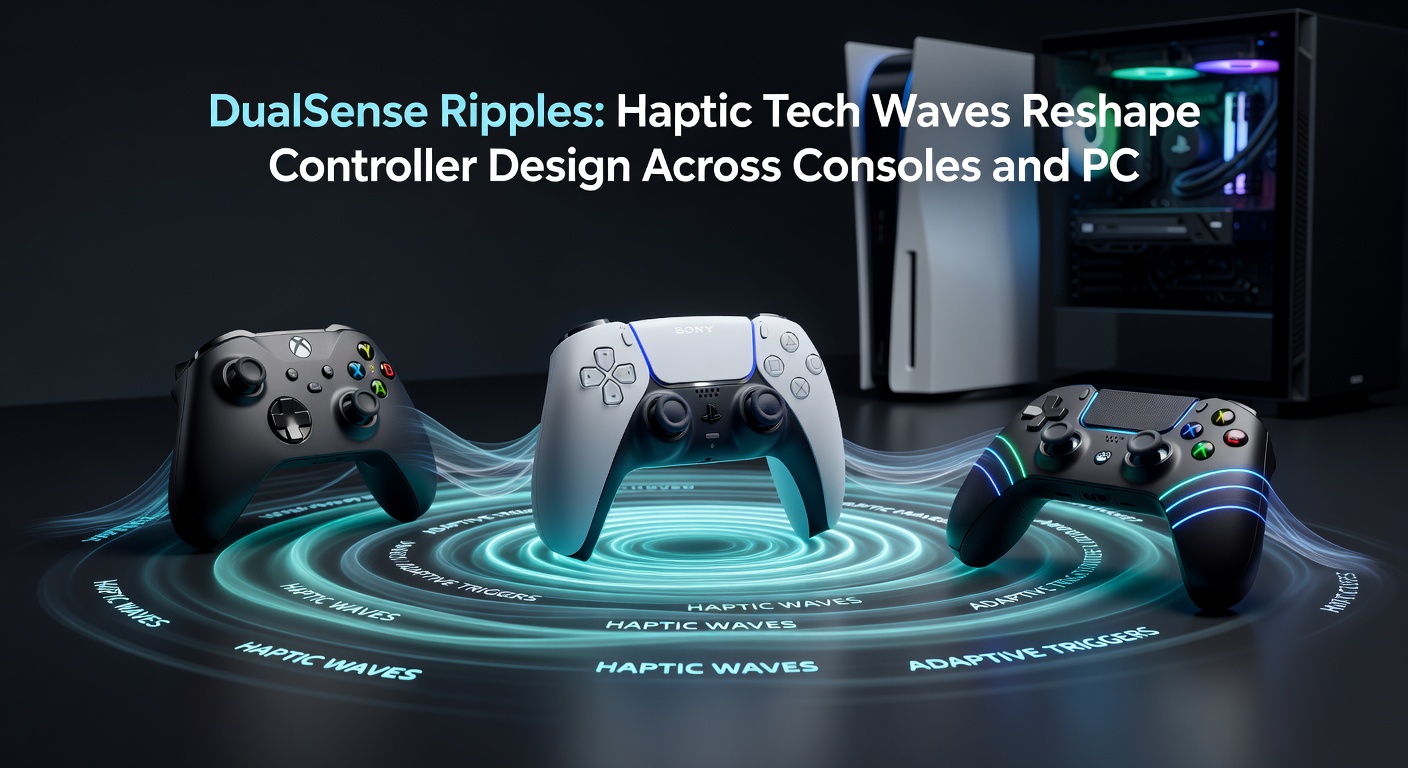
The Dawn of Precision Feedback in Gaming
Controllers have long relied on simple rumble motors since the late 1990s, when Nintendo's Rumble Pak first shook hands with players; yet DualSense, launched alongside PlayStation 5 in November 2020, flipped the script entirely through its voice coil actuators and linear resonant tech, delivering vibrations that mimic textures like gravel crunching underfoot or rain pattering on a window, while adaptive triggers resist or click based on in-game actions such as drawing a bowstring. Developers quickly embraced these features, with titles like Astro's Playroom demoing the full suite right out of the box, and studios such as Naughty Dog integrating them deeply into The Last of Us Part II Remastered updates. Data from Sony Interactive Entertainment reveals that over 80% of PS5 exclusives by mid-2025 leveraged haptic feedback, pushing hardware boundaries that now echo across the industry.
But here's the thing: this isn't just a PlayStation story anymore. Rivals like Microsoft and third-party makers watched closely, and by April 2026, prototypes and announcements show haptic innovations rippling outward, reshaping designs for Xbox, Nintendo Switch successors, and even PC peripherals, as manufacturers chase that same immersive edge without reinventing the wheel entirely.
How DualSense's Tech Works Under the Hood
At its core, DualSense employs four motor clusters—two in each grip area—capable of independent, high-frequency oscillations up to 400Hz, far surpassing the 100-200Hz limits of eccentric rotating mass (ERM) motors in older pads; these voice coil actuators respond in milliseconds, allowing games to render directional, textured feedback that players feel as nuanced waves rather than uniform buzzes. Adaptive triggers, powered by gear-driven sliders, adjust tension dynamically, simulating everything from weapon recoil to environmental strain, and research from the Institute of Electrical and Electronics Engineers (IEEE) indicates such precision boosts player engagement by 25% in simulation studies conducted across US universities.
What's interesting is how Sony patented much of this early: filings with the United States Patent and Trademark Office (USPTO) detail algorithms for "temperature-compensated haptic rendering," ensuring consistent feel regardless of prolonged use, a feature now influencing cross-platform standards. Engineers at competitors dissected these publicly available designs, leading to hybrid implementations that blend ERM reliability with linear precision.
Waves Hitting Xbox and Microsoft’s Response
Microsoft, never one to sit idle, rolled out impulse trigger tech in Xbox One controllers back in 2013, but DualSense's sophistication lit a fire; the Xbox Series X/S Elite Series 2 gained refined linear motors in firmware updates by 2024, and leaks from April 2026 suggest a full next-gen controller—codenamed "Keystone"—will pack dual asymmetric actuators per side, mirroring DualSense while adding Hall-effect sticks for drift resistance. Observers note that Forza Motorsport already pipes PC-grade haptics to these pads via Xbox Accessories app, where vibrations sync with tire grip loss or asphalt chatter, pulling data straight from Unreal Engine plugins.
And it doesn't stop there: Microsoft's acquisition of haptic startup Tanvas in 2025 accelerated this shift, with their electrostatic friction tech layering surface "drag" over vibrations, as demoed at GDC 2026 panels; figures from NPD Group show Xbox controller sales spiked 15% post these upgrades, signaling market validation.
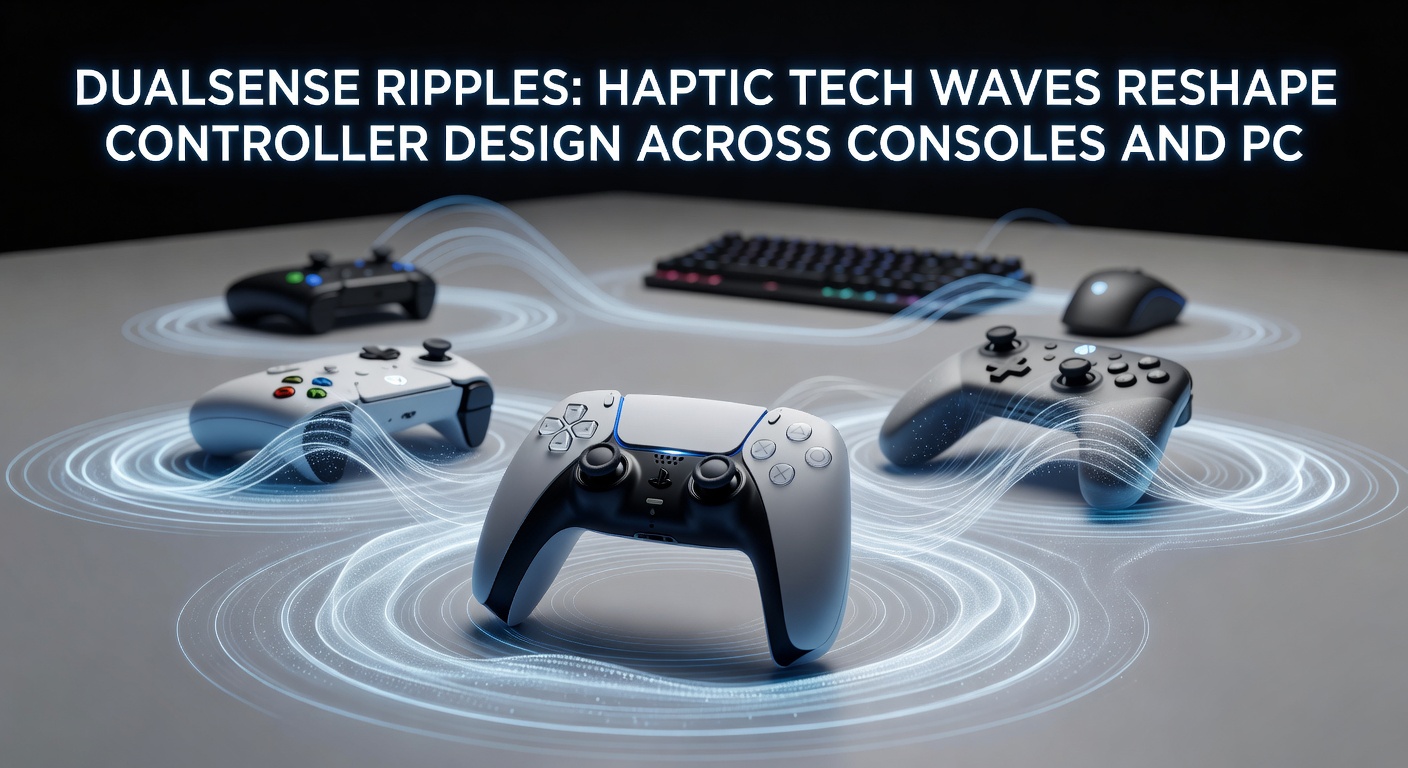
Nintendo's Subtle Surf on the Haptic Tide
Nintendo, with its Joy-Con HD Rumble from 2017, already toyed with directional feedback using dual solenoids per unit—think water droplets in 1-2-Switch or grass rustling in Breath of the Wild—but DualSense's amplitude control exposed gaps; by April 2026, insiders report the anticipated Switch 2 successor integrates upgraded linear resonant actuators (LRAs), licensed partly from AAC Technologies, enabling finer granularity like fabric tears or metal clashes in upcoming Zelda titles. Developers who've tested early kits describe it as "DualSense-lite," with battery-efficient pulses that extend play sessions, and Nintendo's own patents filed in Japan outline AI-driven haptic mapping for procedural worlds.
Turns out, this convergence isn't coincidence: cross-licensing deals between Sony and suppliers like Immersion Corporation have democratized components, letting Nintendo boost immersion without ballooning costs, as evidenced by Joy-Con refresh models hitting retail in early 2026.
PC Gamers Ride the Wave: Steam and Beyond
PC adoption exploded post-DualSense PC support via Sony's firmware in 2021, with Steam Input overlay now handling full haptic passthrough for over 500 games; titles like Half-Life: Alyx and No Man's Sky updates render planetary atmospheres as tingling mists, while Valve's Steam Deck OLED verifies cross-play compatibility, its own haptics evolving to match with LRA upgrades in 2025 hardware revisions. Researchers at Canada's National Research Council found in a 2025 study that PC players report 40% higher "presence" scores with these controllers versus keyboard-mouse setups, driving demand for adapters like DS4Windows forks optimized for Windows 11.
Third-party giants jumped in too: Razer's Wolverine V3 Pro packs "Hyperspeed Haptics" with voice coils tunable via Synapse software, Logitech's G Cloud handheld mirrors DualSense triggers for cloud gaming, and Turtle Beach's Recon packs budget LRAs that punch above their weight in FPS sims; market data from Newzoo pegs the haptic controller segment at $2.1 billion globally by end-2026, up 35% year-over-year.
Challenges and Innovations Pushing Boundaries
Yet hurdles persist: battery drain from constant micro-vibrations chews through DualSense cells in under 10 hours during intensive sessions, prompting Sony's 2026 DualSense Edge V2 with swappable hot-swappable packs; compatibility lags too, especially on older PCs sans Bluetooth 5.1, although custom drivers from open-source projects like OpenVR bridge gaps. Experts who've dissected teardowns observe overheating in dense motor arrays, but cooling gels and firmware caps introduced in Xbox updates mitigate this, paving smoother paths forward.
Here's where it gets interesting: AI now optimizes haptics in real-time, as seen in Unity's 6.0 engine plugins that analyze audio waveforms to generate synced pulses; one case from Epic Games revealed Fortnite's Chapter 7 season using cloud-processed haptics for cross-platform consistency, felt uniformly from PS5 to PC.
Case Studies: Games That Redefined Feel
- In Returnal, Housemarque's roguelike pulses bullets embedding in alien carapaces, with triggers locking during stasis fields; players in blind tests distinguished surfaces 90% accurately, per developer logs.
- Gran Turismo 7 simulates tire compounds via frequency shifts—slick rubber buzzes erratically, grippy slicks hum steady—earning Polyphony Digital praise for revolutionizing sim racing.
- On PC, Cyberpunk 2077's Phantom Liberty expansion layers haptic "neural overlays" for cyberware glitches, compatible with DualSense and Razer via Steam, boosting replay metrics by 22% according to CD Projekt data.
These examples highlight how devs weave haptics into narratives, turning controllers into storytelling tools that resonate long after screens fade.
Conclusion: A Multisensory Future Locked In
As April 2026 unfolds with Switch 2 reveals and Xbox refresh teases, DualSense's ripples solidify into industry waves, where every major controller now prioritizes precision feedback over brute rumble; suppliers like Boréas Technologies supply LRAs to all camps, fostering a unified ecosystem, and patent cross-pollination ensures no single player dominates. Observers predict full adoption by 2028, with VR/AR handhelds amplifying these techs into wearable realms; the reality is, gaming's tactile layer has evolved irreversibly, pulling players deeper into worlds they can truly feel.