20 Jun 2026
Frame Pacing Fluctuations and Retention Curves in Staggered Regional Rollouts
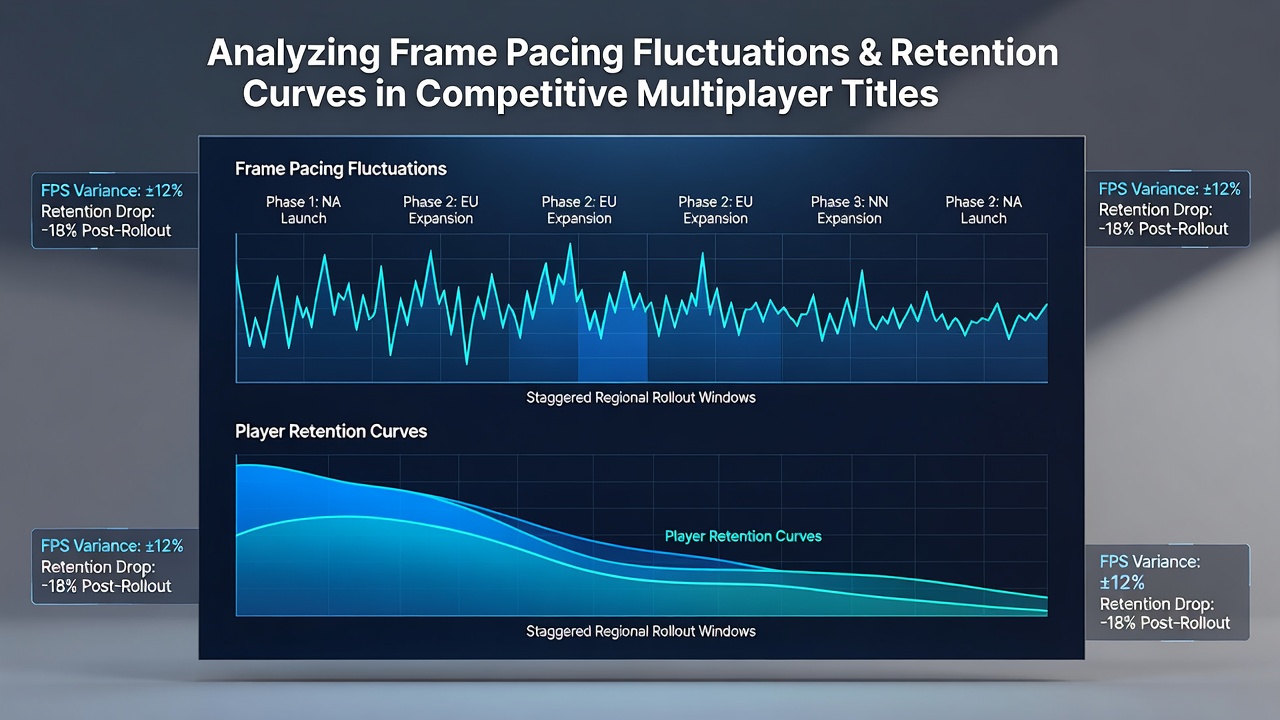
Competitive multiplayer titles often launch through staggered regional rollout windows that allow developers to monitor performance metrics across different hardware ecosystems and player bases while data teams track how frame pacing stability influences long-term engagement, and researchers have documented these patterns through telemetry collected during sequential releases in various markets.
Frame pacing refers to the consistency of frame delivery times rather than raw frame rates alone, and fluctuations appear when rendering pipelines encounter variable loads from network synchronization, asset streaming, or background processes that create uneven intervals between frames. Retention curves plot the percentage of players who remain active over days or weeks after initial login, and analysts compare these curves against pacing data gathered from early rollout regions to identify potential correlations before wider deployment.
Telemetry Collection During Sequential Launches
Developers gather frame time histograms alongside daily active user figures and session length distributions in the first region to establish baseline patterns, then they replicate the same logging framework in subsequent regions to enable direct comparisons across staggered timelines. In June 2026 several major competitive titles began phased launches that started in North American servers before moving to European and Asian markets, which gave teams multiple weeks of comparative data on how pacing variations affected drop-off rates in each wave.
Studies from the Entertainment Software Association have shown that titles maintaining frame time variance below 2 milliseconds across 95 percent of frames tend to exhibit slower decay in the first-week retention metric compared with titles that allow larger spikes during peak player counts. Observers note that network latency compounds these effects in multiplayer environments because client-side prediction adjustments can introduce additional jitter when server reconciliation occurs at irregular intervals.
Correlation Patterns Across Regions
Data sets from multiple titles reveal that regions receiving the game later often display different retention slopes once frame pacing issues surface during high-density matches, and analysts attribute part of the difference to hardware diversity rather than content familiarity alone. One study revealed that a fighting game series experienced a 12 percent steeper drop in week-two retention in its third rollout region where average frame time deviation exceeded 4 milliseconds during ranked sessions, whereas the initial region maintained steadier pacing and flatter retention curves.
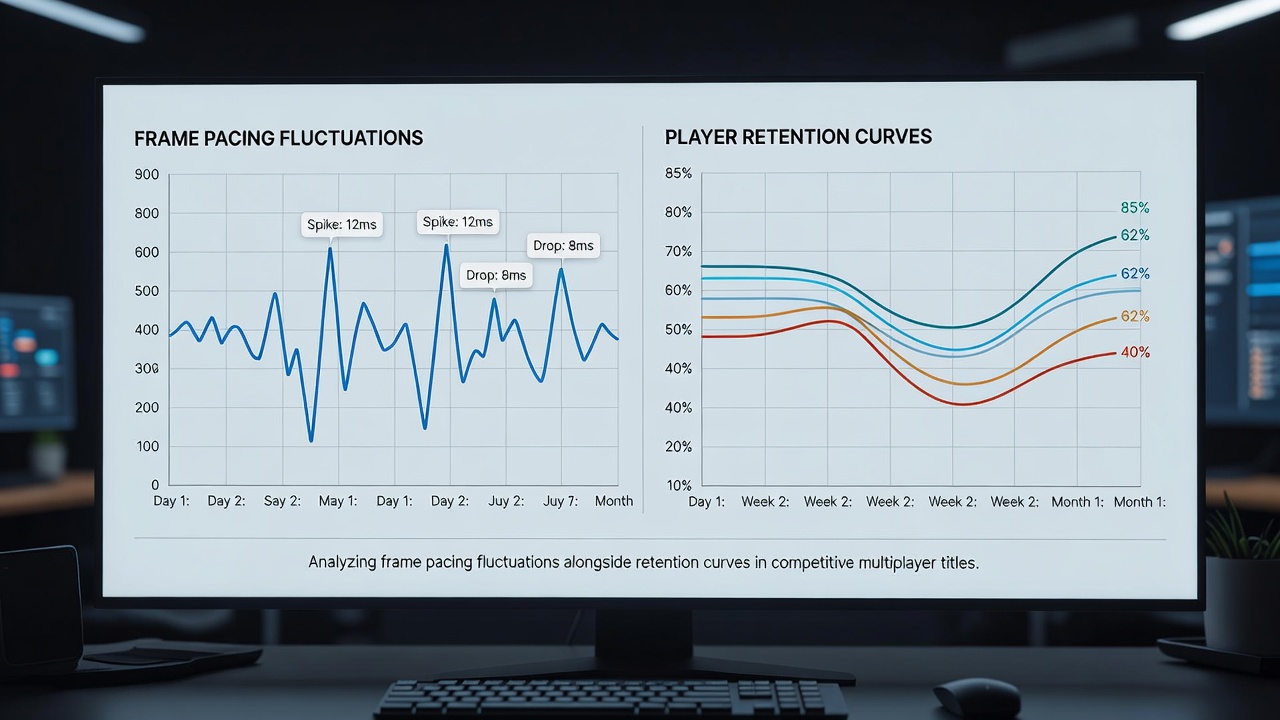
Researchers at several universities have examined these interactions by aligning per-frame telemetry logs with account activity timestamps, and the resulting scatter plots demonstrate clusters where elevated pacing variance coincides with accelerated player departure after the third day of play. Teams adjust matchmaking algorithms or background asset loading schedules between rollout waves to test whether targeted improvements shift the retention trajectory in later regions.
Analytical Methods and Industry Practices
Statistical approaches include calculating the standard deviation of frame intervals within sliding windows of 60 seconds and then overlaying those values against survival analysis models of player lifetime, and such methods allow identification of threshold points where pacing instability begins to accelerate churn. Industry reports indicate that developers frequently deploy hotfixes addressing specific pacing spikes between regional phases, which creates natural experiments for measuring the impact of those interventions on subsequent retention data.
Those who've studied this process observe that console-specific rendering pipelines introduce additional variables because different architectures handle asynchronous compute workloads with varying degrees of consistency, and cross-platform titles therefore require region-by-region calibration to keep pacing aligned. Government agencies in Australia and Canada have referenced performance telemetry guidelines in broader digital entertainment discussions, though direct regulatory oversight remains limited to accessibility and consumer protection aspects rather than technical metrics.
Conclusion
Staggered regional rollouts continue to provide structured opportunities for correlating frame pacing measurements with retention curves in competitive multiplayer environments, and ongoing refinements in telemetry granularity support more precise identification of causal links between rendering stability and sustained player activity across successive market entries. Data collected through these phased deployments informs iterative adjustments that developers apply before full global availability.