23 May 2026
From Demo to Full Release: Player Feedback Loops That Refine Mechanics in Early Access Titles
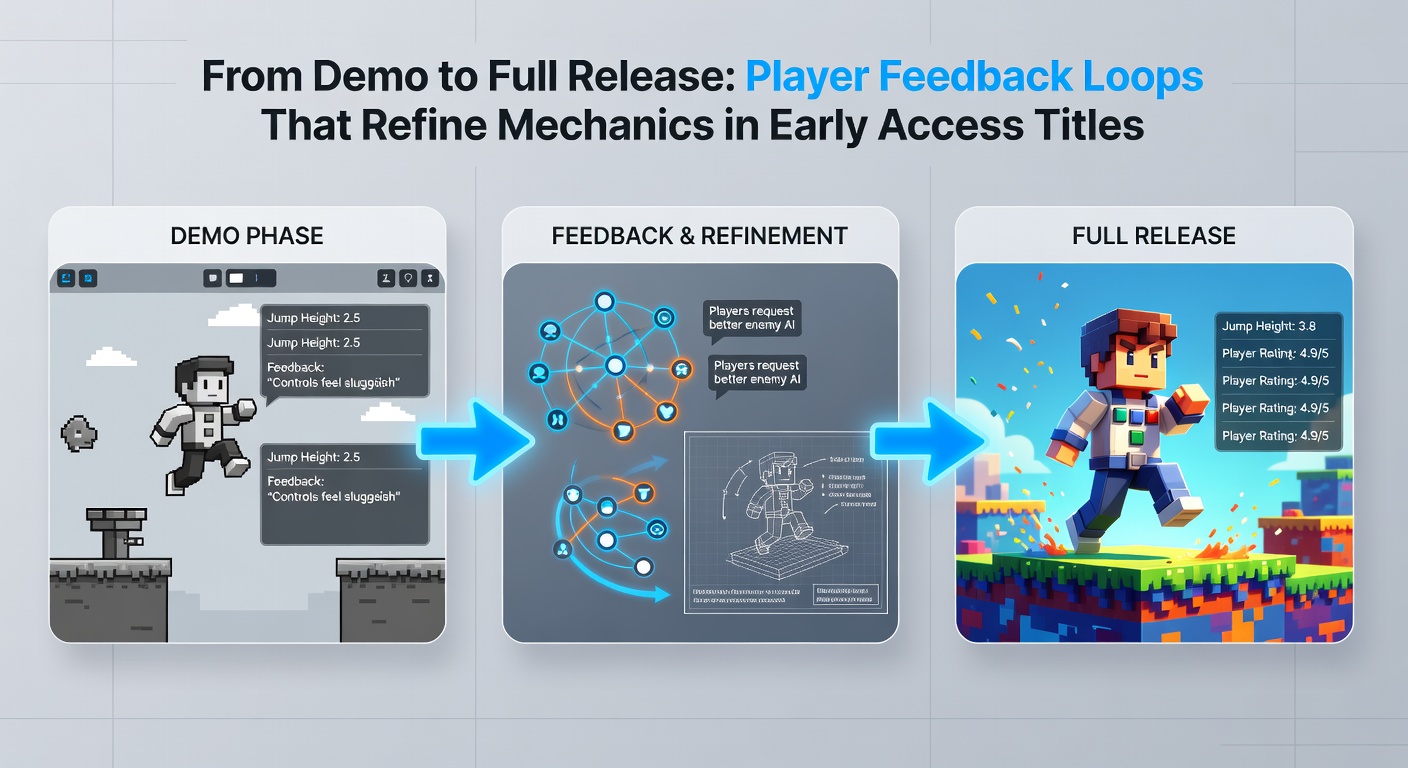
Early Access programs have become a standard pathway for many titles, allowing developers to release playable versions while mechanics remain in active development and players contribute directly to refinement processes through structured feedback systems. These loops begin during demo phases and continue through full release, with data collection methods that track player behavior, suggestion submissions, and iteration cycles based on aggregated input.
Mechanics Refinement Through Structured Loops
Developers implement feedback systems that collect data on core mechanics such as combat timing, resource management, and level progression, then apply changes across multiple update cycles. According to industry reports from the Entertainment Software Association, titles using these methods often see measurable shifts in retention metrics between initial demo releases and later builds. Players submit reports through in-game tools, forums, and surveys, creating datasets that highlight friction points like unresponsive controls or unbalanced difficulty curves.
Teams prioritize adjustments by analyzing patterns in playtime data and completion rates, which reveal how specific mechanics perform under varied player skill levels. This approach differs from traditional development because changes occur in public view, with each patch incorporating elements drawn from community observations rather than internal testing alone.
Data Collection Methods Across Platforms
Platforms hosting Early Access content provide built-in analytics that capture session length, feature usage frequency, and drop-off points within levels or missions. Developers cross-reference these statistics with qualitative feedback to identify which elements require adjustment, such as altering enemy AI response times or modifying inventory systems for better flow. Research from academic sources including papers published through the ACM Digital Library shows that feedback volume tends to peak shortly after major patches, prompting rapid response protocols from teams.
Case Patterns in Mechanic Evolution
One notable pattern involves survival mechanics where initial resource scarcity leads to player complaints about grind, prompting developers to introduce new crafting options or adjust spawn rates in subsequent builds. Another example appears in multiplayer titles, where feedback on matchmaking algorithms drives refinements that balance team compositions more effectively over time. These iterations rely on version control systems that allow rollback if an update produces unintended effects, ensuring stability remains a priority throughout the process.
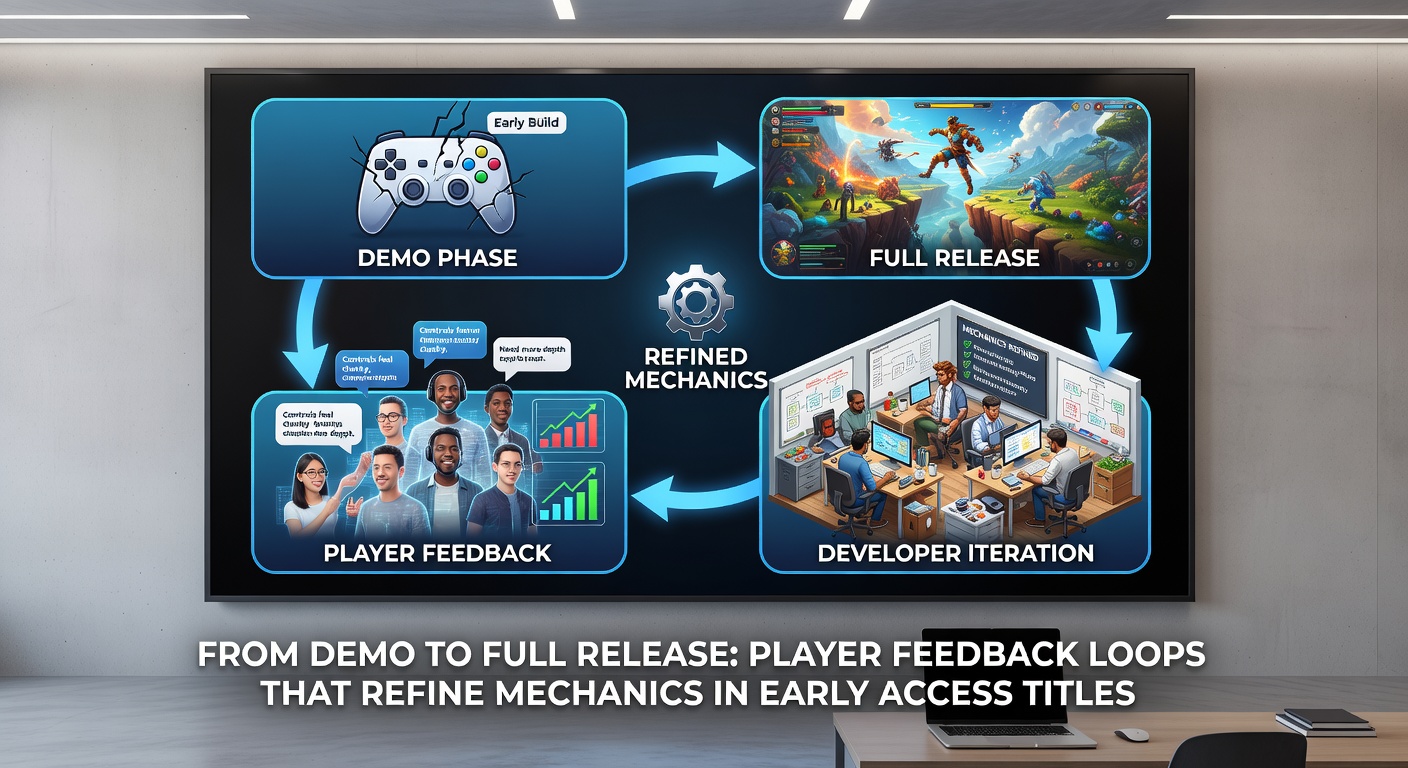
Observers note that games released in May 2026 continue to demonstrate these loops in action, with several titles incorporating real-time polling features that gauge reactions to proposed changes before implementation. Such tools reduce the risk of widespread dissatisfaction by validating adjustments against larger player samples first.
Challenges in Managing Feedback Volume
High volumes of input can overwhelm smaller teams, leading some developers to adopt automated categorization tools that sort suggestions by theme and frequency. This filtering process helps maintain focus on high-impact changes while archiving lower-priority items for later consideration. Data from multiple sources indicates that successful loops often involve transparent communication about which feedback receives priority and why certain suggestions remain unaddressed in a given cycle.
Regional differences also influence feedback content, with players from various markets highlighting preferences tied to local playstyles or hardware configurations that affect mechanic feel. Developers track these variations to ensure updates address a broad range of experiences without fragmenting the core design.
Transition to Full Release Standards
As titles approach full release, feedback loops shift emphasis toward polish elements such as tutorial clarity and endgame content balance. Metrics collected during this phase compare against earlier benchmarks to confirm that refinements have produced intended outcomes in player engagement and completion rates. The process concludes when developers determine that remaining adjustments align with release criteria established at the project's outset.
Conclusion
Player feedback loops in Early Access environments provide structured pathways for mechanic refinement that connect initial demos to polished full releases through repeated cycles of data gathering, analysis, and implementation. These systems rely on platform analytics, community submissions, and iterative updates that address identified issues while maintaining overall project direction. Patterns observed through 2026 show continued reliance on these methods across diverse genres and team sizes.