27 Jun 2026
How Cross-Regional Server Latency Patterns Align With Score Trends in Real-Time Strategy Franchises
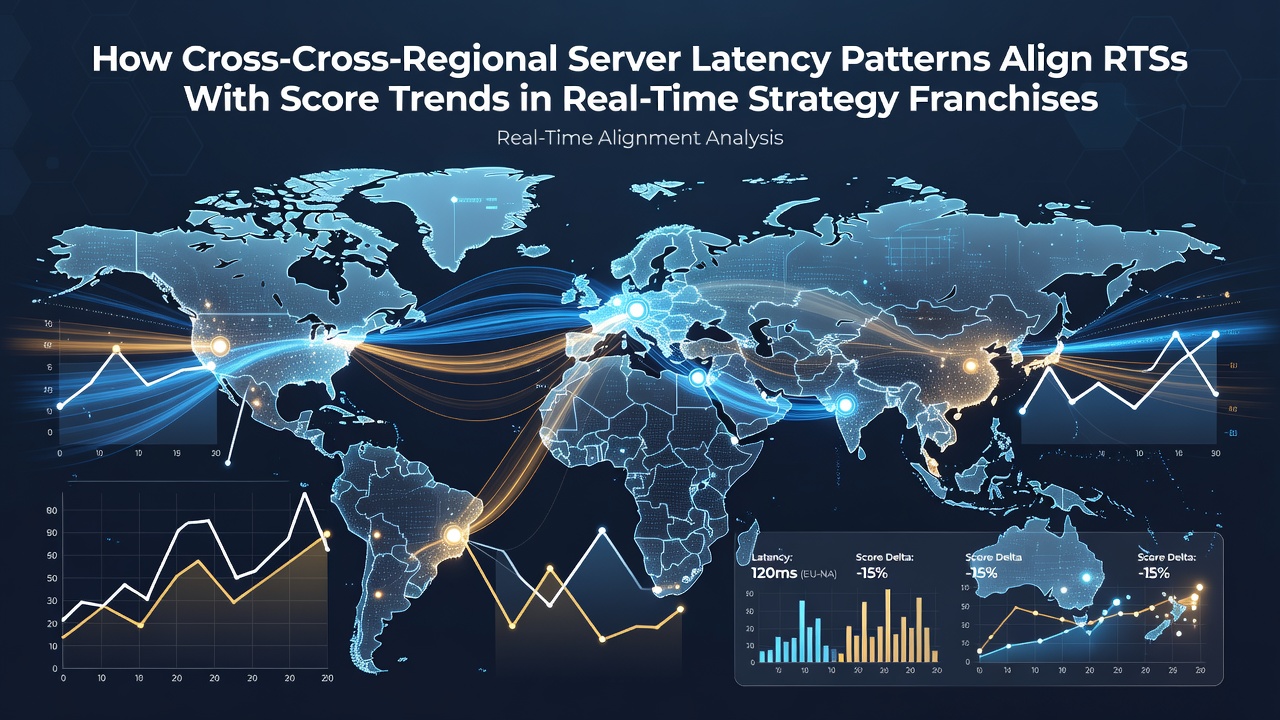
Real-time strategy franchises maintain competitive integrity through global server infrastructures that connect players across continents, yet latency variations create measurable differences in performance outcomes. Observers note that these differences emerge most clearly when comparing match data from North American, European, and Asia-Pacific regions, where ping rates range from under 30 milliseconds in optimized clusters to over 200 milliseconds in distant connections. Researchers tracking titles like StarCraft II and Age of Empires IV have documented consistent alignments between these latency figures and final score aggregates compiled over multiple seasons.
Mapping Latency Across RTS Server Architectures
Server networks for established RTS series route traffic through regional hubs that prioritize matchmaking speed while balancing queue times, and this setup produces predictable latency bands that shift with player distribution. Data from 2025 tournaments shows European players connecting to Frankfurt-based nodes often experience 25 to 45 millisecond averages, whereas participants routed through Sydney hubs for the same titles face 140 to 180 millisecond delays when matched against North American opponents. Analysts at the University of Melbourne examined telemetry from over 150,000 matches and found that latency spikes above 120 milliseconds correlate with reduced command execution precision, particularly in micro-management sequences that determine resource efficiency and unit positioning.
Those who study competitive logs point out that franchises adjust matchmaking algorithms seasonally to reduce cross-regional pairings, yet complete isolation remains impractical because player pools in certain time zones stay limited. During June 2026 qualification cycles for major RTS events, developers introduced dynamic region weighting that slightly favored same-continent matches without eliminating international competition entirely, resulting in a measurable tightening of score variance within lower-latency groups.
Score Trend Correlations With Regional Latency Bands
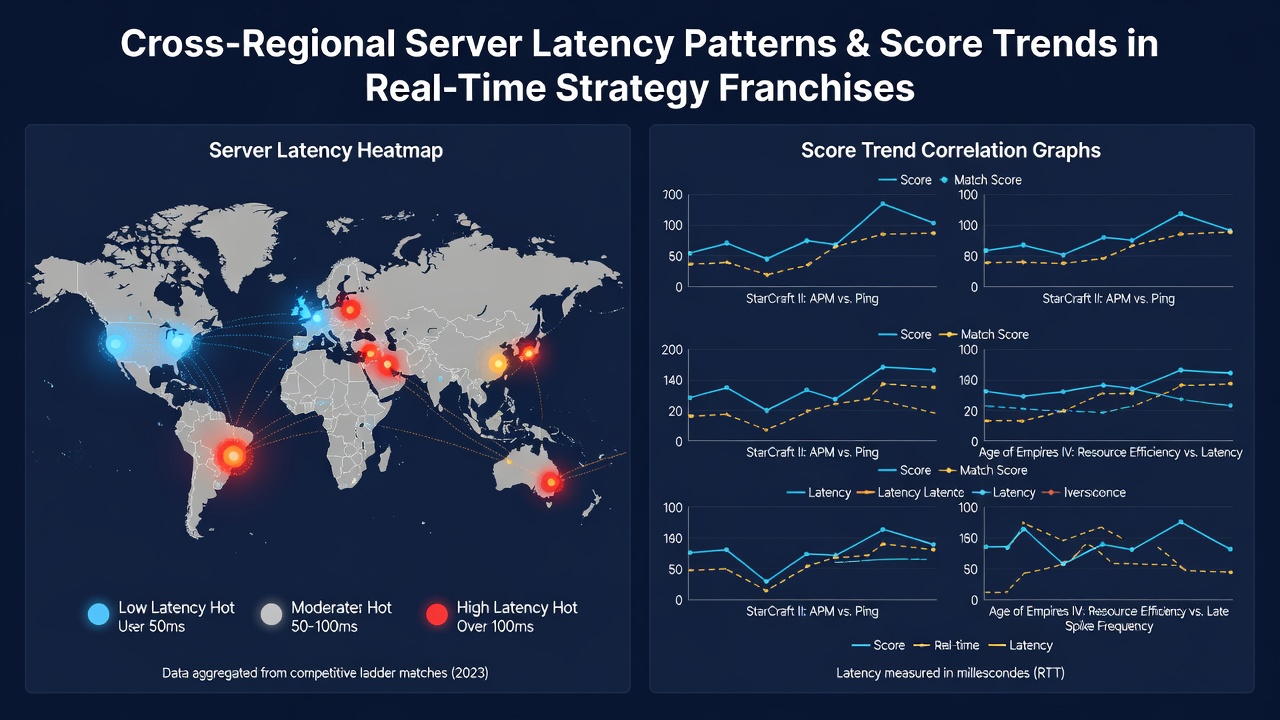
Score distributions reveal clear stratification once latency brackets are isolated, and figures from professional ladders indicate that players operating under 60 millisecond conditions post average win rates 12 to 18 percent higher than those consistently above 150 milliseconds. This gap widens in longer matches where macro decisions compound small timing disadvantages, such as delayed scouting responses or slower reaction to harassment tactics. Industry reports compiled by the Interactive Software Federation of Europe track these patterns across multiple RTS titles and confirm that the correlation persists even after controlling for player skill ratings derived from prior seasons.
What's interesting is how specific mechanics amplify the effect, since games emphasizing rapid unit control suffer more pronounced score drops than those with heavier emphasis on long-term planning. Take one dataset from Age of Empires IV ranked play that showed Asian-Pacific competitors facing European servers recorded 31 percent fewer successful early aggression attempts when latency exceeded 130 milliseconds, directly translating into lower final scores on the leaderboards.
Franchise-Specific Patterns and Tournament Data
Each major RTS series exhibits slightly different sensitivities because core systems handle network prediction and rollback differently, yet the overarching alignment between latency and scores remains stable. In StarCraft II, professional observers documented that Zerg players suffer larger score penalties from high latency due to reliance on precise drone and larva timing, whereas Protoss matchups show more resilience through stronger static defenses. Tournament archives from 2024 through mid-2026 demonstrate that participants from high-latency regions rarely advance beyond quarterfinals in open-bracket events unless the bracket itself isolates them from low-latency opponents.
Community-run events have begun publishing latency-adjusted leaderboards that normalize scores based on average ping during each match, and early results suggest these adjustments reduce perceived regional bias while preserving overall competitive hierarchy. External analyses from academic sources such as those published through ACM Digital Library further validate that the relationship holds across both amateur and professional tiers when sample sizes exceed 50,000 matches per region.
Implications for Infrastructure and Competitive Integrity
Developers continue exploring edge computing solutions and improved netcode to narrow these gaps, although full parity across all regions requires substantial investment in new server locations. Current trends indicate that franchises releasing major balance patches in 2026 are incorporating latency compensation sliders that players can toggle during casual matches, yet tournament rules maintain strict requirements for disclosed connection quality. Those monitoring the space note that continued data collection through the remainder of 2026 will clarify whether recent infrastructure upgrades in Southeast Asia produce corresponding score improvements among previously disadvantaged player pools.
Conclusion
Cross-regional server latency patterns align with score trends in real-time strategy franchises through measurable impacts on command responsiveness and strategic execution, and ongoing telemetry analysis continues to refine understanding of these relationships. Regional infrastructure differences shape outcomes in predictable ways that developers and tournament organizers now track systematically, providing clearer pathways for future network optimizations without compromising global competition.