Mapping Update Cadence Patterns Against Player Migration Trends in Live Service Strategy Titles Across Console and PC Ecosystems
Written by Petra Bennett · Aug 24, 2026
Mapping Update Cadence Patterns Against Player Migration Trends in Live Service Strategy Titles Across Console and PC Ecosystems
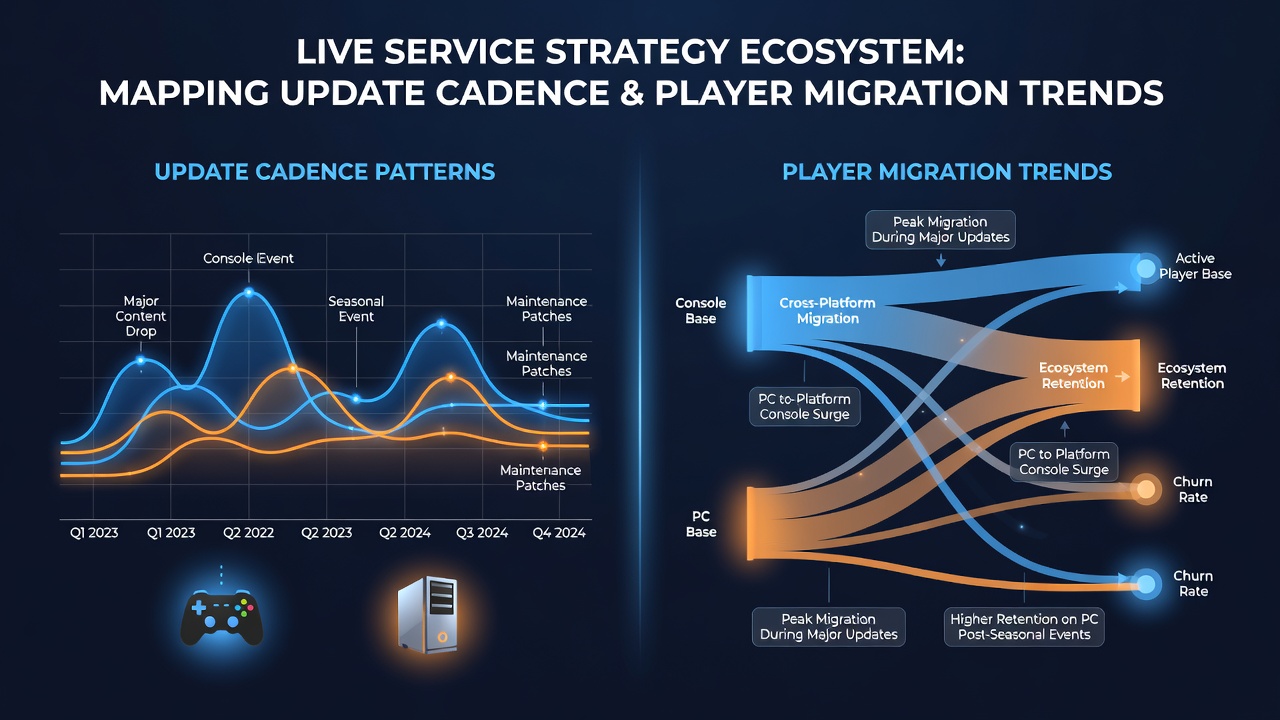
Live service strategy titles operate on release schedules that shape how players move between platforms and games over time, and researchers track these movements through telemetry data collected from both console networks and PC storefronts. Data from the Entertainment Software Association shows that titles receiving major content drops every six to eight weeks retain cross-platform populations longer than those following quarterly cycles, while shorter intervals correlate with brief spikes followed by steady outflows to competing releases.
Console ecosystems introduce hardware-specific variables because firmware updates and online service maintenance windows often coincide with developer patch deployments, creating periods when players pause engagement until stability returns. PC platforms, by contrast, allow more flexible rollout timing through digital distribution services, yet they also expose titles to rapid competitor launches that accelerate migration when update gaps widen beyond ten weeks.
Tracking Cadence Intervals Across Major Releases
Analysis of strategy franchises launched between 2023 and 2025 reveals distinct patterns in how frequently studios ship balance changes, new factions, and seasonal events. Titles maintaining bi-monthly updates demonstrate lower weekly churn rates on both PlayStation and Xbox ecosystems, while PC communities show higher tolerance for three-week gaps provided the changes address community-reported issues. Observers note that August 2026 data sets already indicate continued alignment between these intervals and sustained login metrics across regions.
Player migration accelerates when multiple competing titles align their larger expansions within the same calendar month, prompting simultaneous drops in active accounts for older entries. Console data indicates that cross-save functionality reduces some of this movement by allowing users to carry progress between devices, yet many still sample new releases on whichever platform offers the quickest access during launch windows.
Regional Variations in Engagement and Platform Shifts
North American and European player bases respond differently to update timing compared with Asia-Pacific markets, where mobile integration and shorter session lengths influence migration speed. Reports compiled by the Interactive Software Federation of Europe document that European console users maintain higher retention when patches arrive on consistent mid-month schedules, whereas PC players in the same regions shift more readily toward titles offering daily login rewards during update droughts.
Australian industry surveys further separate these trends by showing that console owners migrate less when updates coincide with local school holiday periods, creating predictable retention bumps. PC ecosystems lack similar seasonal anchors because of their always-available nature, leading developers to rely instead on staggered regional events that spread content releases across time zones.
Telemetry Correlations and Long-Term Retention Metrics
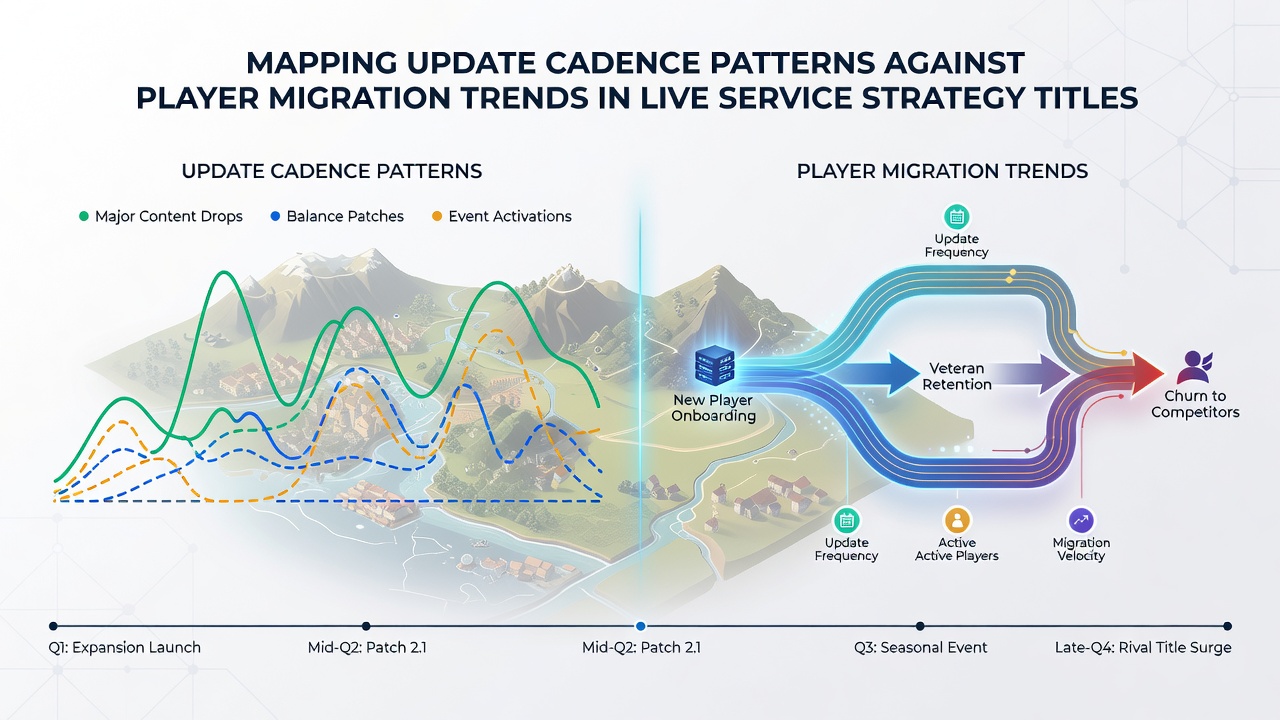
Studies conducted by university research groups have mapped how the length of time between content updates predicts the percentage of players who remain active after six months. Data indicates that strategy titles issuing balance patches within four weeks of community feedback maintain higher average playtime per account across both console and PC, while those stretching intervals past twelve weeks experience steeper declines in daily active users.
Console hardware limitations sometimes delay the deployment of complex updates that PC versions receive first, creating temporary population imbalances that resolve once parity is restored. These gaps appear most clearly in titles supporting cross-play, where PC communities often test new mechanics ahead of console rollout and then influence migration decisions for the broader player base.
Longitudinal tracking through 2026 continues to show that titles balancing frequent minor patches with occasional larger expansions achieve the most stable retention curves, reducing the likelihood that players will sample competing releases during quiet periods. Industry reports compiled from multiple storefronts confirm these patterns hold across major strategy franchises regardless of publisher size.
Conclusion
Patterns emerging from update cadence mapping against player migration data provide developers with measurable indicators for scheduling future content across console and PC ecosystems. Continued collection of telemetry through August 2026 and beyond will refine these correlations, allowing studios to adjust intervals based on platform-specific behaviors and regional differences already documented in existing studies.