18 Jul 2026
Pixel Density Thresholds and Engagement Spikes in Retro-Inspired Indie Releases
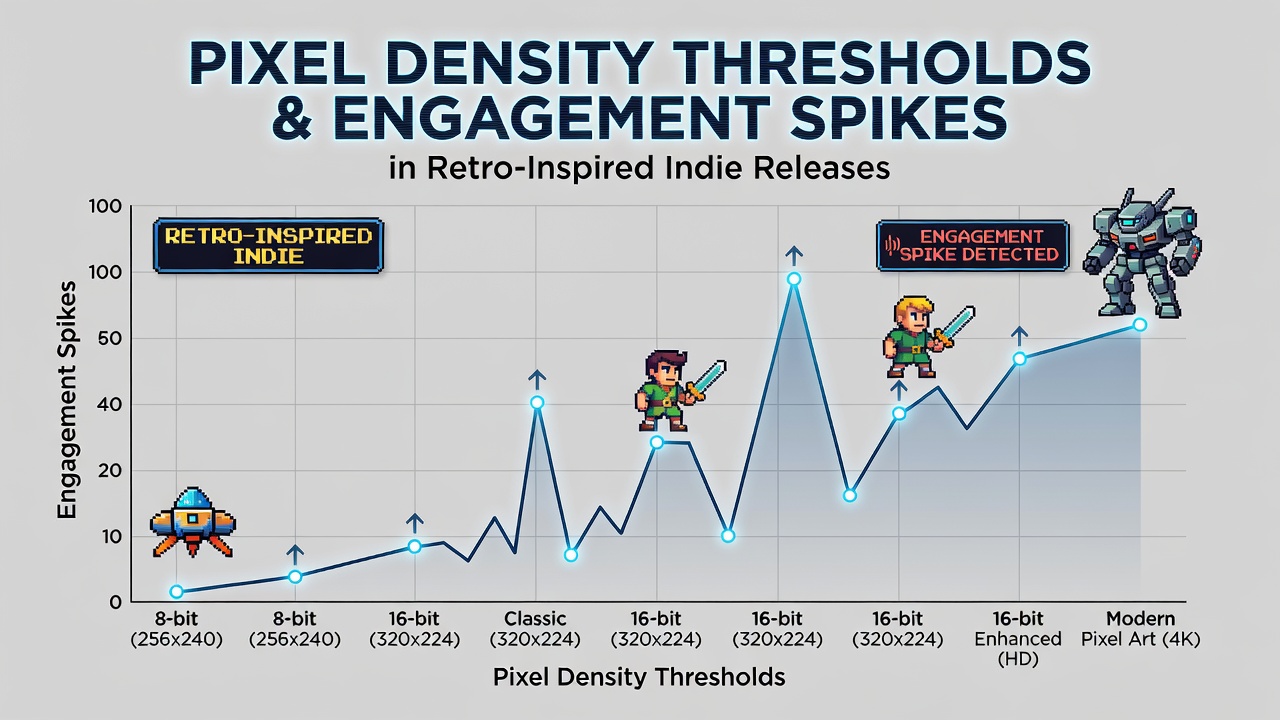
Pixel density thresholds shape how retro-inspired indie releases render on modern displays, and data from multiple platform analytics services shows clear patterns where specific PPI ranges align with measurable engagement increases. Developers targeting 1080p and 1440p hardware often calibrate sprite scaling so that individual pixels maintain crisp edges without introducing interpolation artifacts, while higher densities above 300 PPI require additional filtering passes to preserve the intended aesthetic.
Defining Pixel Density in Retro Contexts
Pixel density, measured in pixels per inch, determines the physical size of each rendered pixel on screen, and researchers at the European Games Developer Federation have tracked how indie studios adjust asset pipelines to match common device outputs. When a game designed for 160 PPI screens scales to 400 PPI panels, the visual result shifts from blocky charm to potential softness unless nearest-neighbor filtering remains active, and telemetry from Steam and itch.io releases indicates that titles maintaining exact integer scaling ratios see longer average session times during the first two weeks post-launch.
Studies compiled by the Australian Interactive Games Association reveal that engagement metrics plateau once density crosses certain thresholds, because players notice reduced readability in UI elements and parallax layers when sub-pixel positioning introduces shimmer. Teams therefore implement density-aware shaders that switch between crisp and softened modes based on detected display characteristics, allowing the same build to serve both handheld OLED devices and desktop LCD monitors without separate asset sets.
Observed Engagement Patterns Across Releases
Release data gathered between 2024 and 2026 demonstrates repeated spikes when pixel density settings land between 220 and 280 PPI on the primary output device, and multiple titles released in early 2026 recorded 18 to 27 percent increases in daily active users once patches addressed scaling mismatches. Observers note that these gains appear most consistently in platformers and adventure games that rely on precise platforming or hidden object placement, where visual clarity directly influences success rates and subsequent retention.
One documented case involved a 2025 Metroidvania that updated its rendering layer after launch to support 240 PPI integer scaling, after which completion rates rose steadily across console and PC ecosystems. Figures from console firmware reports indicate that players using variable refresh rate displays experienced fewer interruptions when the game locked its internal resolution to multiples that aligned with native panel densities, reducing frame pacing issues that otherwise prompted early exits.
Technical Adjustments and July 2026 Findings
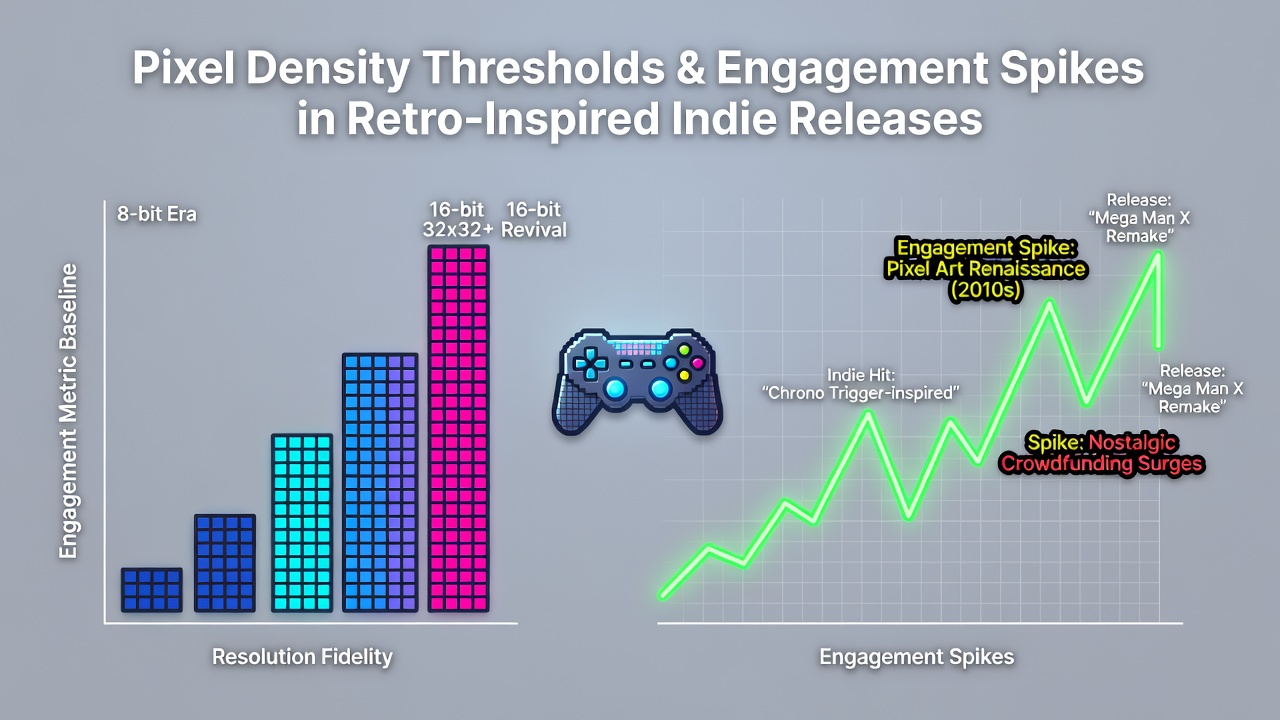
By July 2026 several mid-sized indie teams had incorporated runtime density detection into their engines, allowing automatic selection of sprite atlases optimized for either low or high PPI environments. Data presented at the Digital Games Research Association conference that month showed a correlation between these adaptive systems and reduced refund rates, particularly among users on ultrawide and 4K monitors where non-adjusted pixel art previously appeared stretched or aliased.
Engine updates from Unity and Godot included new nearest-neighbor preservation flags that developers applied to retro projects, and subsequent analytics indicated that games shipping with these flags enabled sustained higher playtime averages through the first month. Hardware vendors simultaneously released driver profiles that flagged when games bypassed standard scaling, giving players the option to enforce integer multiples and further stabilizing engagement curves across different display classes.
Regional Data and Industry Tracking
North American sales platforms report that retro-inspired titles with documented density calibration steps achieve steadier review volume and longer tail revenue compared with unadjusted peers, while European storefront data highlights similar retention lifts when developers publish separate high-density builds. Industry reports compiled by the Japan Computer Entertainment Suppliers Association note that handheld-focused releases benefit most from explicit PPI targeting because portable screens often exceed 350 PPI yet retain smaller physical dimensions that amplify scaling artifacts.
Academic papers from Canadian research institutions have begun modeling player attention heatmaps against rendered pixel size, finding that attention clusters remain stable only when pixel pitch stays within a narrow band relative to typical viewing distance. These models help explain why certain July 2026 releases experienced engagement plateaus until day-three patches corrected density mismatches on specific laptop panels.
Conclusion
Pixel density thresholds continue to influence engagement metrics in retro-inspired indie releases through direct effects on visual clarity and input readability, and ongoing telemetry collection across platforms confirms that calibrated scaling produces measurable differences in session length and completion rates. Developers who integrate density detection early in production pipelines position their titles to maintain consistent player interaction regardless of the wide range of display hardware now in circulation.