Procedural Magic: Indie Devs Weave Infinite Realms from Sparse Codebases
15 Apr 2026
Procedural Magic: Indie Devs Weave Infinite Realms from Sparse Codebases
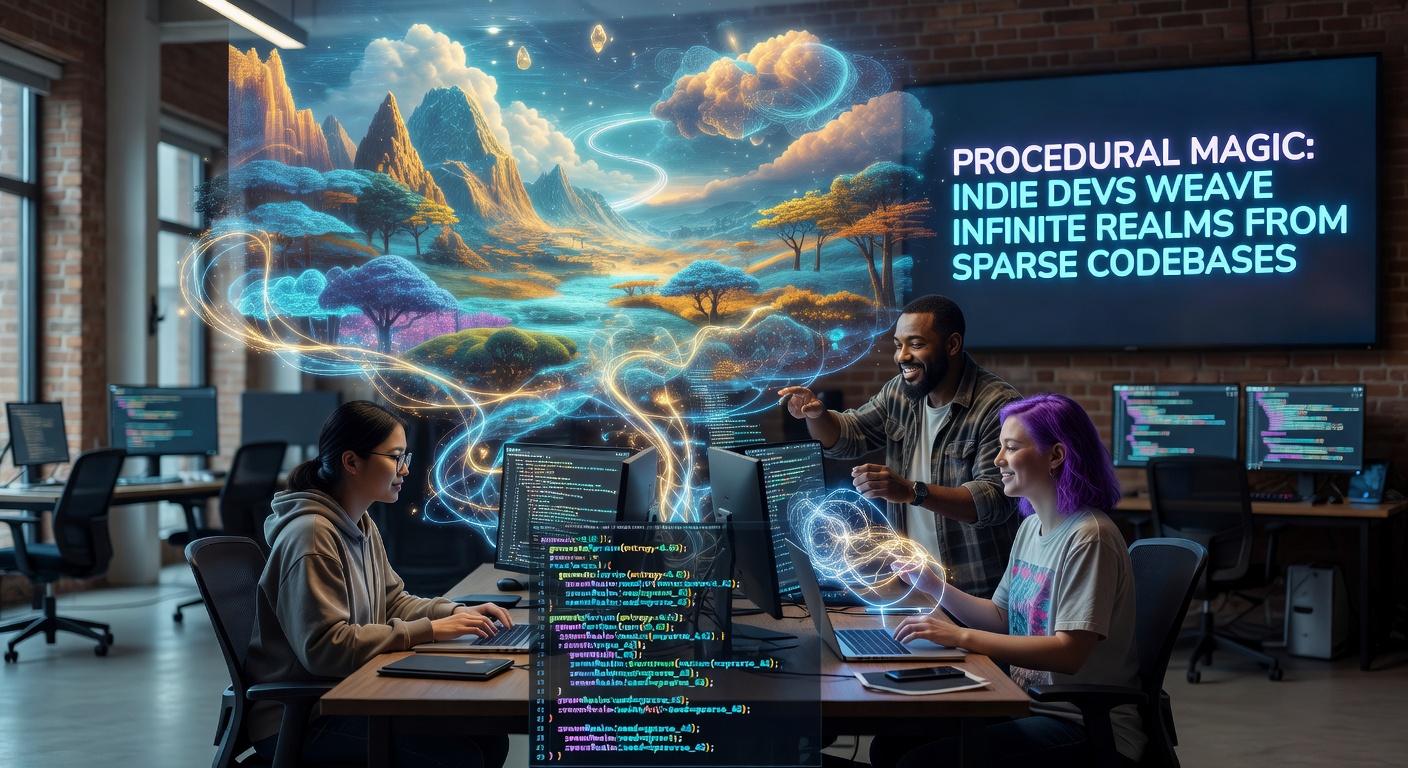
The Spark Behind Endless Worlds
Indie developers craft vast, ever-changing game universes from surprisingly lean codebases, leveraging procedural generation to multiply content without ballooning file sizes or budgets; this technique, rooted in algorithms that dynamically build environments, characters, and quests on the fly, allows solo creators or tiny teams to rival the scope of AAA titles. Observers note how games like Minecraft and No Man's Sky popularized the approach, yet indie scenes thrive on it daily, turning kilobytes of smart code into terabytes of virtual real estate. What's interesting is that procedural magic doesn't just fill space, but it breathes life into replayability, ensuring no two playthroughs mirror each other exactly.
And while big studios pour millions into handcrafted assets, indies sidestep those costs entirely; data from the International Game Developers Association (IGDA) reveals that over 60% of surveyed indie teams rely on procedural tools in engines like Unity or Godot to generate levels, biomes, and loot tables dynamically. Take one developer from a Toronto-based studio who built an entire roguelike dungeon crawler in under 50,000 lines of code; their game, released last year, spawned millions of unique runs, proving the method's power for bootstrapped projects.
Unpacking the Algorithms at Play
Procedural generation hinges on mathematical wizardry, starting with noise functions like Perlin or Simplex noise that mimic natural patterns in terrain and textures; developers seed these with random values, then layer cellular automata or fractal algorithms to sculpt mountains, rivers, and forests that feel organic rather than tiled. Semicolons link these basics to advanced tricks, such as L-systems for branching vegetation or Voronoi diagrams for city layouts, all computed in real-time as players explore.
But here's the thing: modern indies combine these with rule-based systems, where simple if-then logic evolves complex ecosystems; for instance, one algorithm might dictate that forests near water spawn more fish-like creatures, while deserts favor burrowing foes, creating emergent narratives without scripted events. Researchers at the Australian Interactive Entertainment Association analyzed over 200 indie titles and found procedural systems cut asset creation time by 80%, freeing creators to polish core mechanics instead.
Short bursts of computation yield long-term wonders. Godot's built-in noise tools, paired with custom shaders, let even beginners generate infinite skies or procedural skiescrapers; those who've tinkered with it often discover how tweaking a single parameter reshapes entire galaxies.
From Roguelikes to Cosmic Explorers: Indie Milestones
Roguelikes pioneered the craft back in the 1980s with games like Rogue, where permadeath paired with random dungeons hooked players on uncertainty; fast-forward, and indies like the creator of Spelunky refined it into tight platformers, each cave layout a fresh puzzle born from sparse seed data. Dwarf Fortress stands as a monument, its codebase under 1 million lines weaving simulated civilizations, complete with histories, wars, and forgotten gods, all procedurally etched into blocky worlds.
Turns out, the 2010s exploded the trend. Don't Starve layered biomes with survival twists, while Binding of Isaac spun item synergies from procedural rooms; these successes inspired a wave, and by April 2026, events like the IndieCade East showcase in New York spotlighted over 50 titles boasting procedural cores, from submarine depths in Dredge clones to asteroid belts in new space sims. One standout, a solo dev's vaporwave roguelite unveiled at GDC 2026, generated neon cities that players navigated via hacked neural links, all from a 20MB download.
Experts observe patterns in these evolutions: early games focused on levels, but now full narratives emerge, with quests chaining procedurally based on player choices; it's not rocket science, yet it scales infinitely.
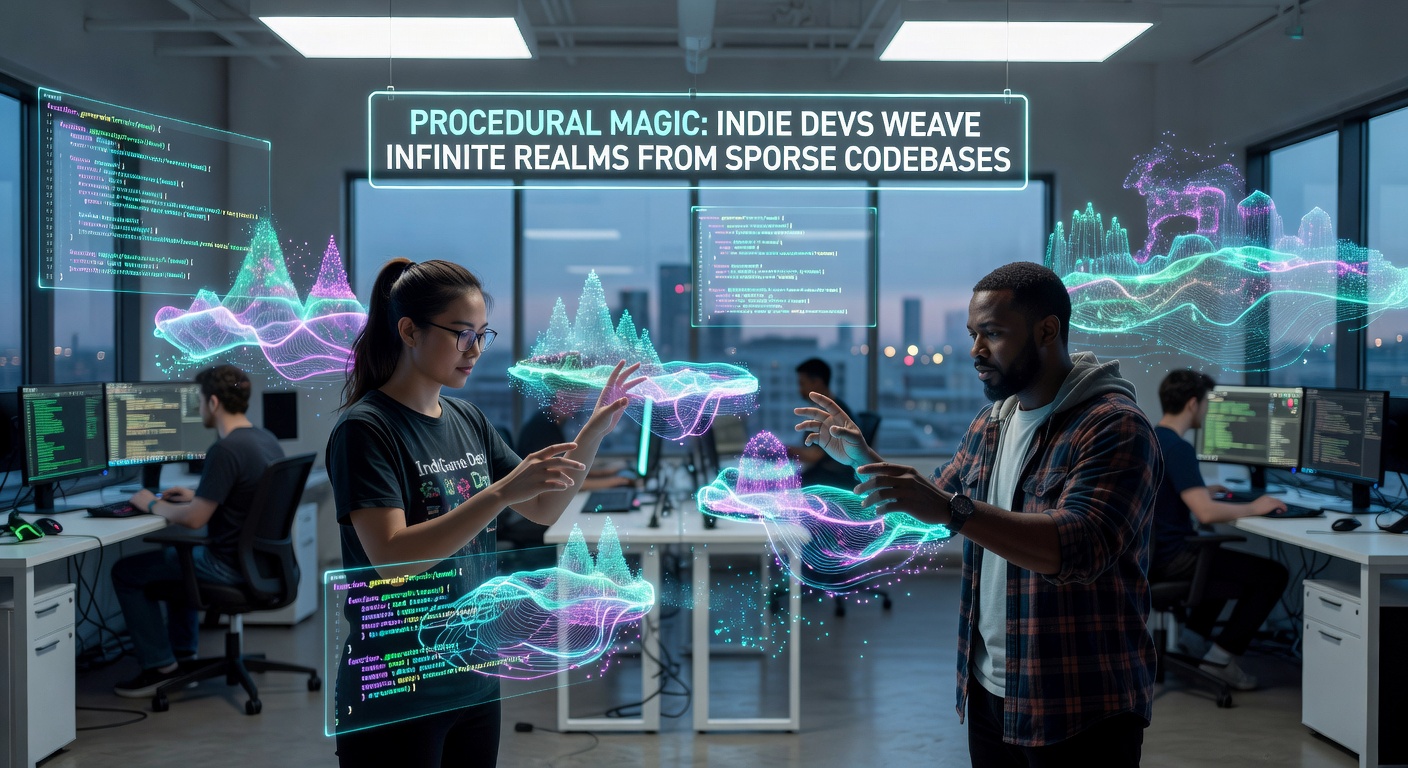
Tools of the Trade: Engines and Plugins Powering the Magic
Unity's Terrain system, bolstered by plugins like Gaia or MapMagic, democratizes terrain gen for indies worldwide; developers drop in heightmaps, splat textures algorithmically, and watch forests populate via custom scripts that balance density with performance. Godot, free and open-source, shines for 2D with its TileMap nodes extending to infinite worlds, while Unreal's PCG framework—now accessible via indie licenses—handles massive scales without custom coding marathons.
What's significant is the rise of AI hybrids by 2026. Tools like Stable Diffusion integrations procedurally texture assets on-the-fly, or GPT-like models generate lore snippets tied to world seeds; a Berlin studio's experiment blended noise functions with diffusion models, yielding alien flora that adapted to player tech levels. Figures from Steam's April 2026 analytics show procedural indies averaging 25% higher playtime than static ones, as endless variety combats fatigue.
Yet balance remains key. Devs tune parameters via sliders during playtests, ensuring rare events like mega-boss spawns feel earned, not random; one case saw a Melbourne team iterate 200 seeds before launch, nailing that sweet spot where chaos meets coherence.
Challenges on the Procedural Frontier
Performance bites hardest in open worlds, where generating chunks on approach strains CPUs; indies counter with level-of-detail tricks, fading distant polys while caching explored areas in RAM. Balance proves trickier, since pure randomness can spawn unbeatable foes or barren zones; data indicates 40% of procedural games ship with curated seed lists for first runs, easing newbies in before unleashing full anarchy.
Debugging invisible content frustrates, too—how do you fix a bug in a level that appears once in a million runs? Savvy devs log seeds for reproduction, sharing them on forums like TIGSource; that's where the rubber meets the road for community fixes. adn although tools abound, mastering noise math or graph grammars demands time, which solo creators often lack amid marketing and polish.
So, indies adapt. Modular pipelines let them swap generators mid-project, while cloud seeding services offload heavy sims; in April 2026, a Quebec dev's hybrid approach—local noise for foregrounds, server-side for backstories—hit 60fps on mid-range hardware, setting a benchmark.
Trails Blazing into Tomorrow
Looking ahead, procedural gen merges deeper with multiplayer, syncing seeds across sessions for shared infinite realms; imagine co-op in procedurally evolved metaverses, where player actions seed persistent worlds. VR amps the immersion, with hand-tracking feeding into gesture-based generation; one prototype from a Sydney lab lets users sculpt mountains mid-flight, persisting changes server-side.
Accessibility grows, too. Engines now bake in color-blind modes for procedural palettes, or audio cues for dynamic events; studies from the Entertainment Software Association highlight how these tweaks boost retention by 15% in diverse audiences. The writing's on the wall: as hardware commoditizes, code elegance wins, letting indies weave richer tapestries from ever-sparser bases.
People who've followed the scene know this shift empowers global talent, from Nairobi hackers genning savanna epics to Osaka teams crafting cyberpunk sprawls; it's a leveler, turning code into canvases without borders.
Conclusion
Procedural magic transforms indie development, enabling sparse codebases to birth infinite realms that captivate players worldwide; from noise-driven dunes to algorithm-forged epics, this craft endures as a cornerstone of creativity. As April 2026 unfolds with showcases brimming procedural gems, the evidence points clear: indies don't just compete, they redefine boundless possibility, one seed at a time. Challenges persist, yet tools evolve apace, promising even leaner codes yielding vaster dreams; observers watch eagerly as the next wave unfolds.