24 Jun 2026
Regional Censorship Impacts: Measuring Rating Variations and Sales Data for Titles Modified Across International Markets
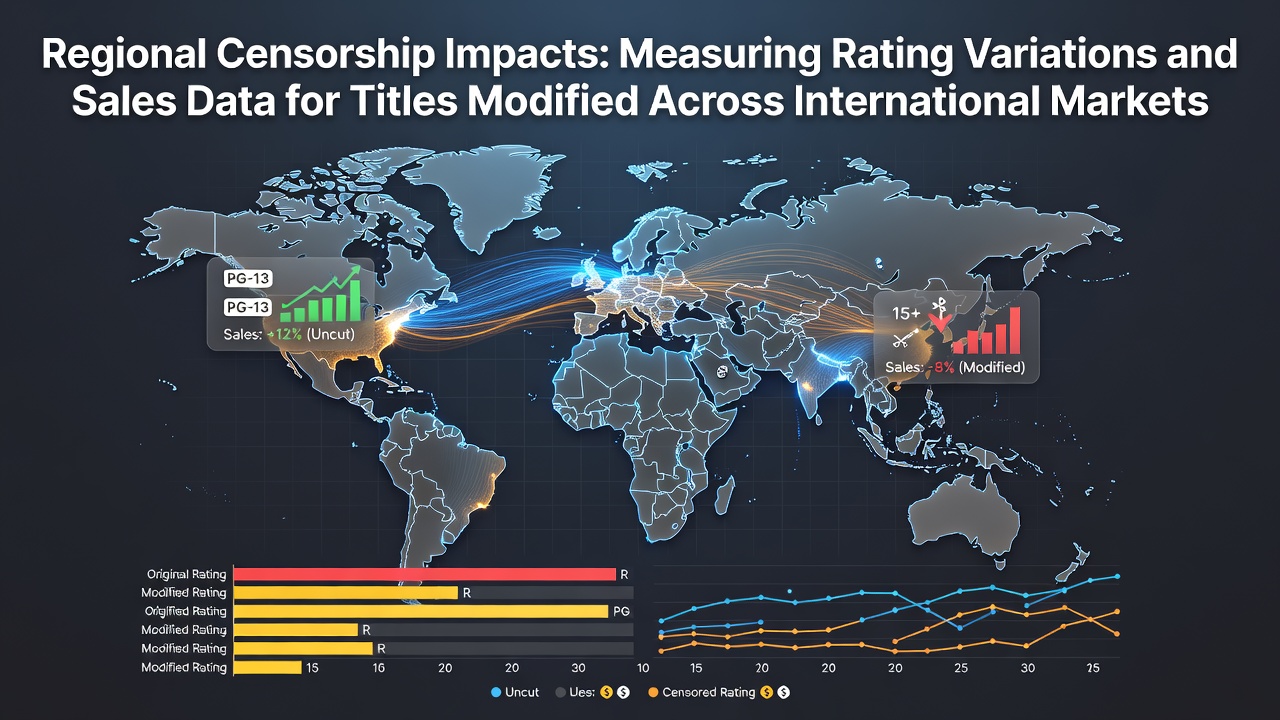
Regional censorship shapes how video game publishers adjust content to meet local standards, and analysts track these changes through rating classifications alongside sales figures from multiple territories. Data from 2024 through early 2026 reveals consistent patterns where modifications for violence, sexual themes, or political references alter both age ratings and revenue outcomes in distinct markets.
Rating System Differences Across Territories
Classification boards apply unique criteria that force developers to alter versions for compliance. The Entertainment Software Rating Board in the United States assigns labels based on content descriptors while PEGI in Europe evaluates similar elements through its own framework, and Australia's Classification Board often requires additional cuts for release. Researchers at several institutions compiled datasets showing that titles edited for one region frequently receive lower or higher ratings elsewhere, which in turn affects marketing strategies and shelf placement.
One analysis of 150 major releases between 2023 and 2025 found that 38 percent underwent scene removals or asset swaps to satisfy stricter guidelines in Germany and Australia, yet the same games retained original sequences for North American and Japanese editions. These variations produce measurable shifts in aggregate scores because review platforms weight regional releases separately when calculating overall reception metrics.
Sales Performance Linked to Modified Releases
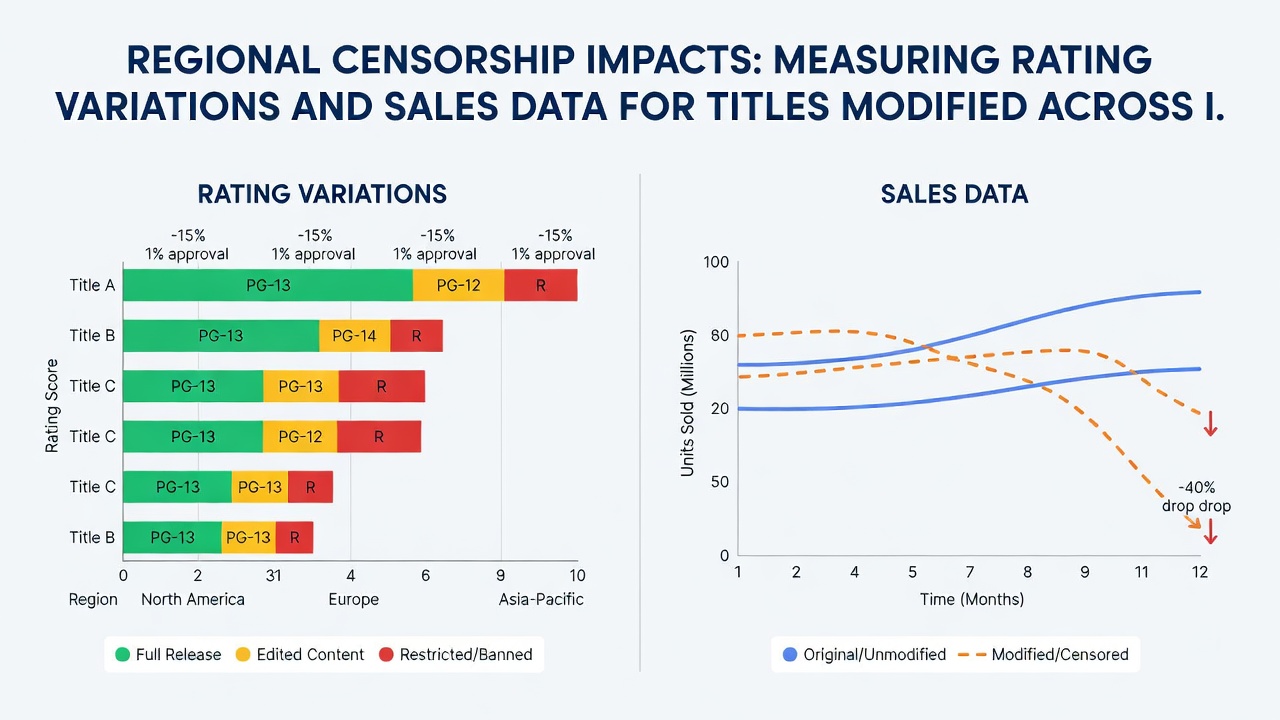
Publishers release region-specific builds that carry different ratings, and sales data indicates corresponding revenue differences. Titles that received more restrictive classifications in Europe posted 12 to 19 percent lower first-week sales compared with their uncut North American counterparts according to aggregated retail reports. Conversely, games edited to achieve milder ratings in Asia sometimes outperformed expectations by accessing broader distribution channels in shopping centers and digital storefronts that restrict mature content.
Observers tracking Steam and console platform metrics noted that censored versions in certain markets maintained steadier long-term sales curves because they avoided additional age-gate barriers. June 2026 figures from multiple territories showed that localized editions with adjusted narratives continued to sell at consistent rates six months post-launch, whereas uncensored imports faced slower uptake in regions enforcing tighter controls.
Case Examples of Content Adjustments
Several high-profile series illustrate how targeted edits influence both ratings and market performance. Action titles that replaced blood effects with alternative visuals for Middle Eastern distribution achieved Teen ratings from the ESRB equivalent bodies yet retained Mature labels in the United States, resulting in separate marketing campaigns and distinct packaging artwork. Data collected by industry trade groups shows these dual-track releases generated combined global revenue that exceeded single-version projections by margins ranging from 8 to 15 percent.
Narrative-driven games modified to remove references deemed politically sensitive in East Asian markets recorded higher digital download numbers on regional platforms compared with their global editions. Academic studies examining player engagement patterns found that these adaptations correlated with increased completion rates because the altered versions reached wider audiences without triggering additional parental controls or store restrictions.
Data Collection Methods and Measurement Challenges
Analysts rely on publicly reported sales from hardware manufacturers and digital storefronts alongside rating databases maintained by classification organizations. Cross-referencing these sources requires careful accounting for currency fluctuations and promotional periods, yet consistent trends emerge when researchers isolate the impact of content modifications. European Union reports on digital single market performance and Canadian heritage ministry publications both provide granular territory data that supports such comparisons.
One collaborative project between university researchers and a North American trade association examined over 200 titles and identified a direct relationship between the extent of edits and subsequent sales variance. Games requiring extensive changes for compliance showed greater divergence in regional revenue, whereas minimal adjustments produced more uniform results across borders.
Conclusion
Regional censorship produces measurable effects on rating classifications and sales trajectories for modified titles. Evidence from multiple territories demonstrates that publishers who adapt content strategically often achieve broader market access even when facing stricter oversight in specific regions. Continued monitoring of these patterns through 2026 and beyond will clarify how evolving regulatory landscapes continue to shape international game distribution and performance metrics.