Shadow Economies: Virtual Currency Fluctuations and Their Ties to In-Game Market Stability Across Persistent MMO Servers
Written by Hugo Lorenz · Jul 20, 2026
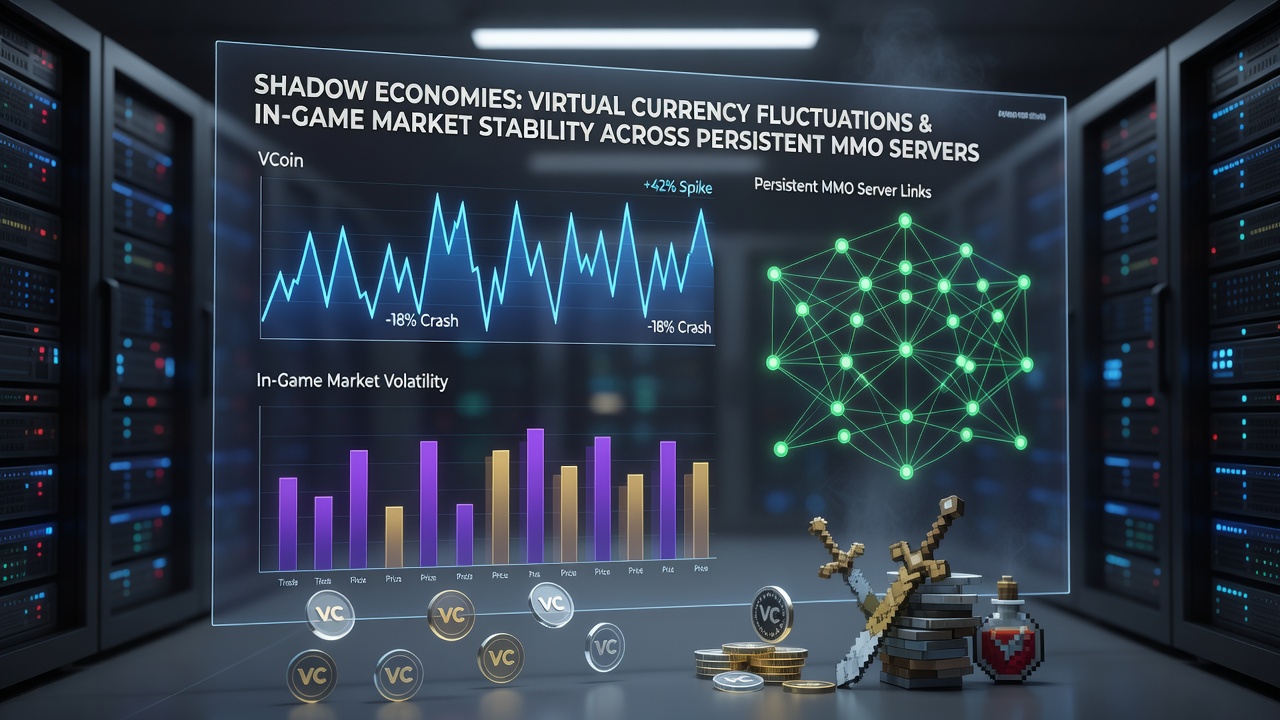
Shadow Economies: Virtual Currency Fluctuations and Their Ties to In-Game Market Stability Across Persistent MMO Servers
Persistent MMO servers host complex in-game economies where virtual currencies like gold, gil, and ISK circulate among millions of players each day, yet shadow economies built on real-money trading introduce external pressures that reshape supply, demand, and pricing structures. Data from major titles shows these unofficial markets often move faster than official systems can adjust, creating ripple effects that reach every corner of player-driven trade hubs.
Researchers tracking server logs across multiple platforms note that currency values can swing by double-digit percentages within weeks when external sellers flood specific servers with bulk resources. These shifts alter how players approach crafting, raiding, and long-term progression because the relative worth of in-game items changes without warning. Persistent worlds amplify the pattern since characters and assets carry forward across months or years, locking communities into economic conditions that began with early fluctuations.
Mechanisms Driving Currency Volatility
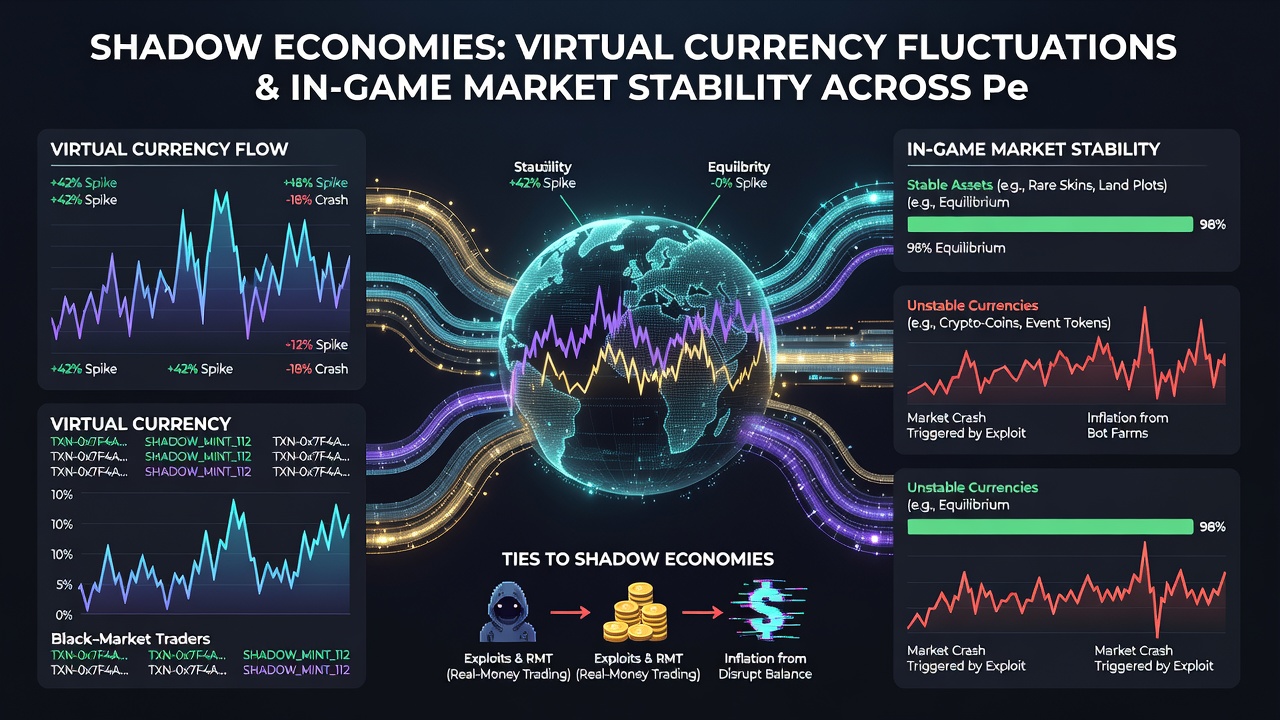
Gold farmers and third-party marketplaces operate by converting real currency into large volumes of in-game money, then selling that money back to players at discounted rates compared with official channels. When supply spikes on one server cluster, average auction house prices for raw materials drop sharply while rare item costs remain elevated, distorting the intended balance between gathering professions and high-end gear markets. Observers tracking transaction data across regions report that servers with higher concentrations of external sellers experience steeper daily variance in median item prices.
Bot networks accelerate these cycles by harvesting resources at rates far beyond manual play, injecting consistent streams of currency and materials that depress legitimate market returns. Studies of server populations reveal that once external sellers control more than a modest share of circulating currency, internal player trading contracts as individuals shift purchases to the cheaper shadow channels. This feedback loop leaves official economies thinner and more sensitive to sudden withdrawals when enforcement actions target specific bot farms.
Market Stability Patterns Across Server Types
Long-running servers demonstrate clearer correlations between shadow economy activity and overall price stability than newer realms because accumulated player wealth creates deeper liquidity pools that absorb or magnify external shocks. In titles with cross-server auction houses, currency injected on one shard spreads rapidly, equalizing prices but also exporting volatility to previously stable clusters. Analysts reviewing aggregate trade data from July 2026 found that servers with active shadow markets recorded higher month-to-month standard deviations in staple resource costs than those with stricter enforcement histories.
Player migration between servers further complicates stability because characters carrying wealth can relocate and dump currency into new markets overnight. Persistent server architectures preserve these wealth transfers across expansion cycles, so early shadow economy surges continue influencing pricing years later. Evidence from multiple MMO titles indicates that once a server’s internal market develops a discount relative to official exchange rates, recovery to prior equilibrium takes longer than the initial disruption period.
Developer Interventions and Their Measured Effects
Game studios deploy automated detection systems, account bans, and currency sinks to counteract external inflows, yet results vary by implementation timing and scale. When developers introduce new gold sinks during periods of rapid shadow market growth, internal prices sometimes stabilize faster because excess currency leaves circulation through legitimate routes. Conversely, delayed responses allow shadow sellers to establish distribution networks that persist even after individual accounts are removed.
Server merges present another variable since they combine separate economic pools that may carry different shadow market histories. Post-merge data sets show temporary price convergence followed by renewed volatility if one legacy economy held larger external reserves. Industry reports compiled by the OECD digital economy division document similar patterns across several persistent titles operating in 2025 and 2026, highlighting how timing of interventions shapes long-term outcomes.
Regional Differences in Shadow Market Influence
Geographic concentration of real-money trading operations affects which servers experience the strongest fluctuations because latency, payment infrastructure, and local enforcement climates shape seller strategies. Servers popular with players from regions hosting large farming operations tend to record earlier and larger price drops in common materials. Researchers comparing North American and European clusters against Asia-Pacific servers note that enforcement actions in one region can shift activity toward less monitored shards rather than eliminating the practice.
Cross-border payment flows add another layer since players in different time zones purchase currency during off-peak hours, creating predictable daily injection patterns that auction algorithms rarely account for. Persistent worlds therefore accumulate these micro-shifts into larger structural imbalances over successive months. A Canadian government analysis of digital marketplaces released in early 2026 identified comparable timing effects in virtual goods traded across multiple game platforms.
Conclusion
Shadow economies tied to virtual currency trading continue reshaping price stability on persistent MMO servers through sustained external inflows, rapid supply changes, and player adaptation behaviors. Data collected through 2026 illustrates measurable links between the volume of unofficial currency and variance in auction house metrics across multiple titles. Developers and researchers track these dynamics to refine detection tools and economic design choices, while server populations adjust trading strategies in response to observed patterns. The interplay between official systems and shadow channels remains a defining feature of long-running MMO economies.