29 Jun 2026
Tracing save file patterns: what completion percentages reveal about player persistence in roguelike genres across digital storefronts
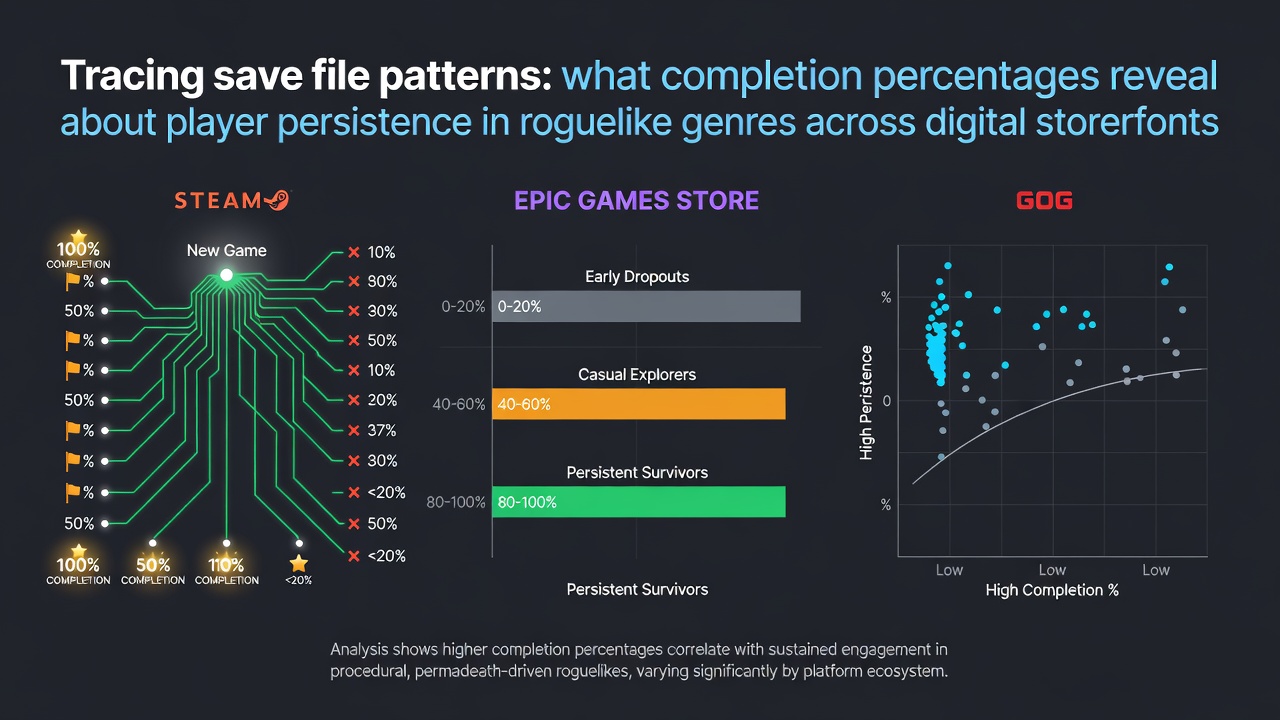
Save file analysis in roguelike genres tracks completion percentages that measure how far players advance through repeated runs before abandoning a title or reaching an endpoint, and these metrics appear consistently across platforms such as Steam, Epic Games Store, and GOG. Researchers examine these patterns by reviewing aggregated telemetry that storefronts release in anonymized forms, revealing retention curves where early drop-off rates often exceed 60 percent within the first ten hours of play. Data from multiple sources shows that titles emphasizing procedural generation maintain higher persistence when completion thresholds sit between 30 and 50 percent of total possible unlocks, while lower figures correlate with quicker exits from active player bases.
Methods for Extracting Patterns from Save Data
Analysts collect completion statistics through public APIs and voluntary reporting tools that developers integrate into their builds, allowing comparison of run lengths and victory rates without accessing individual user accounts. Those who study these datasets note that roguelikes released before 2024 display steeper declines in completion after the initial zone clears, whereas later entries incorporate quality-of-life adjustments that flatten the curve and extend average session counts. Figures released in industry reports indicate that cross-storefront aggregation reduces platform bias, since Steam users tend to log longer sessions than those on the Epic Games Store, yet both groups reach similar endpoint percentages when titles share core loop structures.
Platform Variations in Player Retention Signals
Storefront differences emerge when completion data breaks down by region and hardware ecosystem, with European markets showing steadier persistence in narrative-heavy roguelikes compared to North American cohorts that favor speed-focused variants. According to analysis shared by the Entertainment Software Association, average completion rates for roguelikes on console-linked storefronts reached 42 percent of maximum runs by early 2026, while PC-exclusive releases hovered near 35 percent during the same period. Observers tracking these numbers through June 2026 report that seasonal sales events temporarily boost completion spikes, as discounted purchases bring in players who then complete 15 to 20 percent more content than full-price buyers before disengaging.
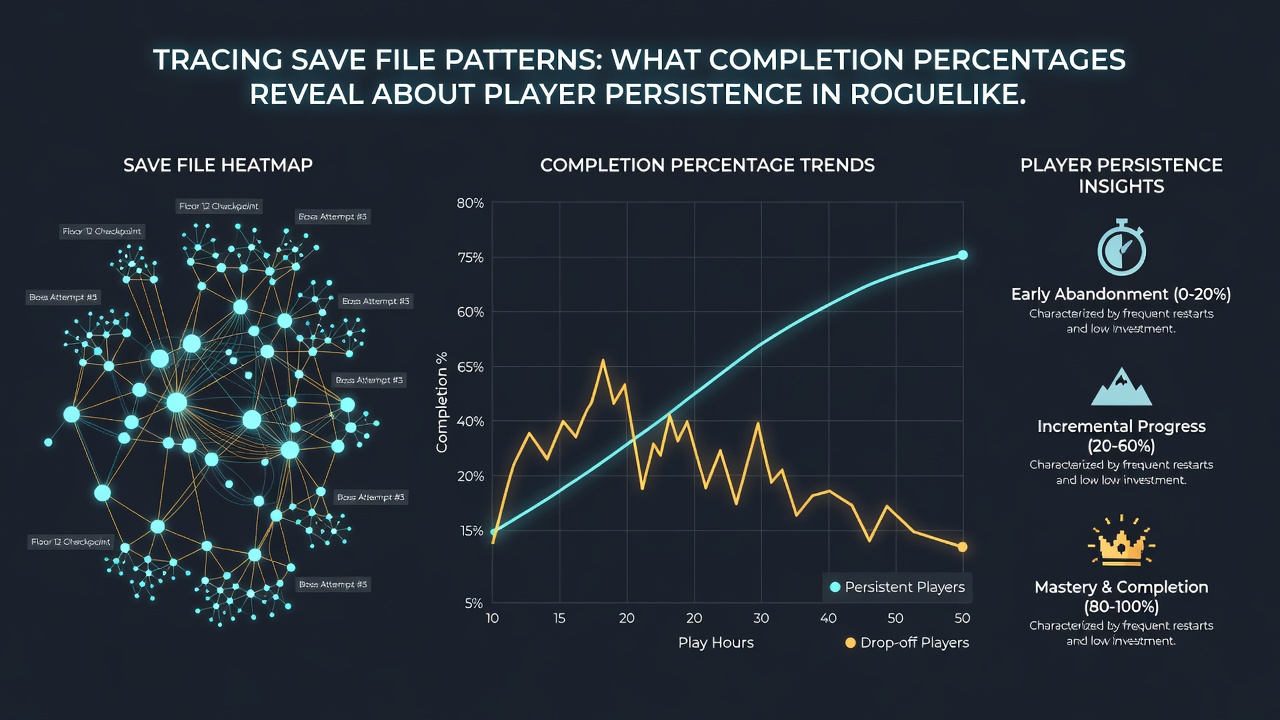
Save file metadata also reveals hardware correlations, since players on portable devices record shorter but more frequent runs that accumulate higher overall percentages than desktop sessions. Researchers at institutions examining these patterns have documented that roguelikes with cloud-save synchronization across stores exhibit reduced abandonment after the halfway mark, because seamless progression removes friction that otherwise interrupts momentum. The reality is that storefront policies on refund windows influence early completion data, with shorter return periods producing slightly elevated persistence metrics as buyers commit sooner to deeper exploration.
Indicators of Sustained Engagement Through Completion Thresholds
Completion percentages serve as proxies for persistence when tracked against total playtime distributions, and patterns show that games crossing the 25 percent mark retain active users at rates nearly double those that stall below it. One study revealed that roguelikes incorporating meta-progression systems see completion curves rise steadily through mid-2026, particularly when unlocks reward incremental mastery rather than pure randomization. Data from multiple storefronts confirms that titles updated with new character classes or zones experience measurable rebounds in completion activity, often lifting percentages by 8 to 12 points within the first month of patch deployment.
Those who review longitudinal datasets note that regional storefront preferences affect visibility of these trends, since certain platforms prioritize roguelike categories differently in recommendation algorithms. Evidence suggests that players who reach 40 percent completion demonstrate markedly higher likelihood of purchasing related titles from the same developer, creating observable patterns in cross-genre buying behavior across digital libraries. What's interesting is how save file timestamps expose session clustering, with weekend play correlating to higher endpoint attainment than weekday attempts in nearly every examined roguelike release.
Conclusion
Tracing save file patterns through completion percentages offers developers and analysts concrete measures of persistence that vary by platform, region, and design choice yet remain consistent enough to inform future updates. Data collected through June 2026 continues to highlight how procedural elements and meta-systems interact with player behavior across storefronts, producing retention signals that guide ongoing refinements without relying on subjective feedback alone. These factual patterns underscore the value of aggregated telemetry as a tool for understanding engagement longevity in the roguelike space.