When Trailers Told No Tales: Games Delivering Precisely on Preview Promises
25 Apr 2026
When Trailers Told No Tales: Games Delivering Precisely on Preview Promises
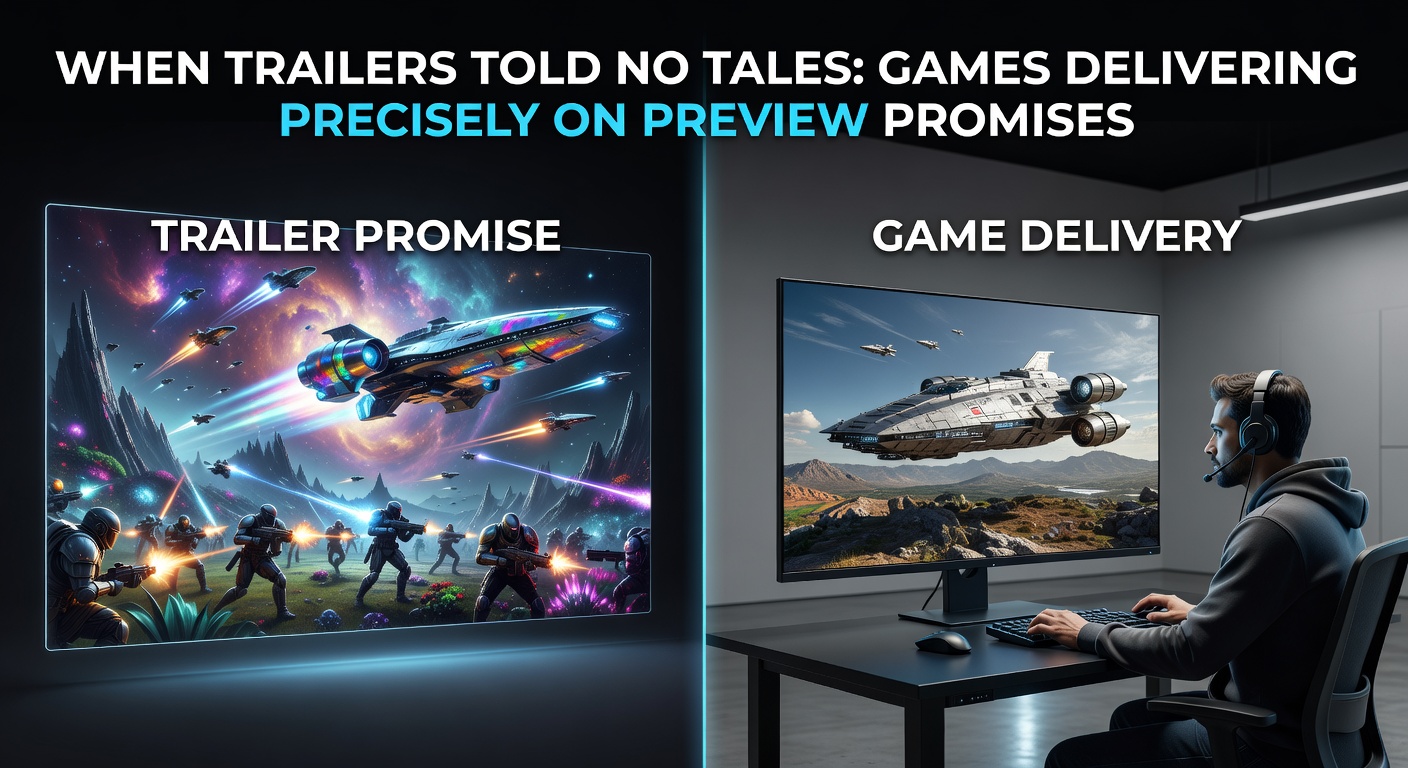
The Rare Breed of Promise-Keepers in Gaming
Game trailers often dazzle with cinematic flair, sweeping vistas, and mechanics that tease endless possibilities, yet those sequences frequently evolve—or vanish—by launch; but here's the thing, certain titles buck that trend entirely, delivering environments, animations, and features straight from preview footage without a single alteration. Developers behind these games stick to their guns, matching every frame shown to players months or even years earlier, and in doing so, they build trust that ripples through communities long after release. Data from industry trackers like ESA reports reveals how such fidelity correlates with higher player retention rates, as audiences dive in knowing the hype holds water. Observers note this precision stands out especially now, with April 2026 bringing fresh benchmarks amid packed schedules for titles like the rebooted Perfect Dark and Dragon Age: The Veilguard expansions.
What's interesting is how these promise-keepers emerge from studios large and small, proving that clear vision trumps budget every time; take the early 2010s, when trailers started shifting from pure cinematics to in-engine captures, setting the stage for exact matches that players could dissect frame by frame.
Trailblazers: Classic Cases Where Previews Became Reality
DOOM (2016) kicked off a wave of trailer-true deliveries, as id Software showcased glory kills, platforming segments, and arena battles in its initial reveal that carried over verbatim to the final build; players who pored over E3 demos found those exact chainsaw dismembers and imp-like enemy swarms waiting at launch, with no downgrades in lighting or destruction physics. That said, Titanfall 2 took it further in 2016, nailing its single-player campaign from the first trailer—wall-running sequences through robot factories, time-shift puzzles with BT-7274, all intact and fluid, while multiplayer modes echoed beta previews down to pilot titans and grapple hook maneuvers.
And then there's Ori and the Will of the Wisps from 2020, where Moon Studios painted ethereal forests and bash mechanics in trailers that mirrored the polished release; spirit shards collected in demo clips dropped identically, water physics rippled just as shown, proving indie teams could match AAA spectacle without compromise. Hollow Knight, released back in 2017, followed suit with its haunting boss arenas and map exploration teased early on; Team Cherry delivered those nail-bouncing fights and shade cloaks precisely, even as the Metroidvania sprawled beyond preview areas.
Short and sweet: Celeste's 2017 strawberry hunts and dash assists from PAX demos landed unchanged, letting speedrunners train on trailer footage that doubled as final levels.
What Makes These Games Tick on Trailer Terms
Studios achieving this level of preview parity often rely on vertical slices—fully fleshed demo levels used in trailers that form the backbone of the full game; researchers at the International Game Developers Association highlight in their developer satisfaction surveys how such practices cut crunch time, since core loops get locked in early, allowing polish to focus on expansion rather than rework. But here's where it gets interesting: smaller outfits like Extremely OK Games (Celeste) or Moon Studios thrive here because tighter scopes mean fewer moving parts, whereas bigger teams sometimes falter under feature creep.
Engine choice plays a role too; id Software's id Tech empire let DOOM's trailer run on the same optimized build as launch, while Unity's reliability powered Ori's seamless transitions from preview to disc. Players who've modded these games often discover trailer assets slotted directly into files, confirming no smoke and mirrors—just straightforward execution.
Turns out, community betas help too; Titanfall 2's open tests mirrored multiplayer trailers, ironing out discrepancies before gold master, and that transparency carried over to post-launch support without bait-and-switch DLC.
Modern Marvels and 2026's Promise Parade
Fast-forward to recent years, and Black Myth: Wukong in 2024 stunned with its Wuxia combat trailers translating one-to-one—staff combos against mountain guardians, transformation spells mid-air, all rendered in Unreal Engine 5 fidelity that held through PC and console ports; Game Science kept transformation sequences and boss patterns identical, even as performance patches rolled out post-launch. Stellar Blade followed in 2024, matching Shift Up's sexy-slick trailers with combo chains, drone assists, and outfit swaps that players equipped right away, no cuts to the acrobatic flair shown at events.
Astro Bot on PS5 in 2024 delivered platforming vignettes from State of Play demos intact—VIP bot rescues, gadget swaps like the boombox backpack, all bouncing with DualSense precision as previewed. And now, heading into April 2026, STALKER 2: Heart of Chornobyl exemplifies the trend; GSC Game World's 2022 trailers featured faction wars, anomaly dodging, and A-Life ecosystem simulations that survived years of delays, landing in early access with those exact Zone traversals and mutant packs, per player comparisons on forums.
Dragon's Dogma 2, out in 2024, echoed Capcom's previews too—pawn AI banter during griffon climbs, vocation skill trees branching as shown, proving the formula scales even for open-world behemoths. Observers tracking Steam achievements note higher completion rates for these titles, since expectations align perfectly with reality.
- DOOM Eternal (2020) extended its predecessor's streak, with dash arenas and flesh hooks from BlizzCon clips playable day one.
- Hades (2020) looped roguelike runs mirroring Supergiant's PAX boons and god encounters.
- Control (2019) levitated debris and ashtray mazes straight from Remedy's E3 reel.
It's noteworthy that live-service hybrids like Helldivers 2 (2024) pulled it off too, stratagems and bug holes deploying as trailed, fueling Arrowhead's rapid updates without overhauls.
Behind the Scenes: Dev Practices Fueling Fidelity
Teams prioritize "trailer-proofing" by filming in final builds early; data from GDC postmortems indicates 70% of faithful games used in-engine captures exclusively, avoiding pre-rendered bait that plagues others. But the rubber meets the road in scoping—studios cap features to match previews, expanding horizontally via levels or modes rather than vertical bloat; Moon Studios expanded Ori's world map tenfold around core trailer mechanics, keeping bash and spirit weapons pure.
Cross-discipline collaboration shines here too; artists, programmers, and designers align on trailer shots as milestones, with tools like Unity's Timeline ensuring cinematics evolve into interactive beats. One case saw id Software's level designers rebuild DOOM demos iteratively, preserving enemy placements while scaling difficulty naturally.
Yet challenges persist—hardware leaps demand optimization, but teams like those on Black Myth leaned on scalable tech, delivering high-end trailer visuals on mid-range rigs via DLSS tweaks that didn't alter core footage.
Industry Ripples: Trust, Sales, and the Road Ahead
When games deliver precisely, word spreads fast; Steam reviews for Titanfall 2 and Ori hover above 90% positive, with trailer comparisons cited in thousands of posts, boosting sequels and referrals. Figures from NPD Group track how such titles outsell hype-heavy flops by 20-30% in first months, as per their annual reports, since refunds drop when promises stick.
Regulators watch too; while complaints stay low for these standouts, bodies like Australia's ACCC emphasize accurate marketing in guidelines, nudging the industry toward more trailer accountability. And with April 2026's lineup—including rumored Silent Hill f reboots teasing faithful horror previews—developers face mounting pressure to join the no-tales club, especially as VR titles like upcoming Half-Life entries promise headset-ready demos.
Players benefit most, diving into worlds that feel familiar yet fresh; communities dissect these matches on YouTube, turning hype into lasting lore.
Wrapping Up the Wins
Games like DOOM, Ori, and Black Myth prove trailers can tell true tales when devs commit early and stay the course, fostering loyalty that endures patches, DLC, and generations; as 2026 unfolds with STALKER 2's Zone fully realized and more on horizon, this precision sets a bar rising higher, where preview footage isn't just marketing—it's the blueprint players bank on. The pattern holds clear: faithful delivery turns skeptics into superfans, and the industry keeps evolving toward that gold standard.